Showing posts with label Food Critics. Show all posts

Monday, 8 November 2021

192. English Peasant Food?


  Fine dining is all very well but sometimes you just need a good scoff served well in an interesting and pleasing location. A good scoff might be defined as good English peasant food, comforting and delicious, as opposed to French peasant food which is much poorer quality than foodies care to admit. Of course real peasants in olden days would not have scoffed great slices of grand roast beef and a plate weighed down with an array of vegetables but English peasant food probably dates from the Fifties onwards, after the austerity of the Second World War and Attlee’s post-war Labour government whose obsession with rationing virtually starved the working people which Labour claimed to represent. Thus the post-rationing generation, celebrating their release from the threat of fascism and the austerity of socialism, learned to eat good food again and in sensible quantities so that they were slim and healthy as the 1950s drew to a close but enjoying good meat, good fish and a cornucopia of vegetables.

  Then Elizabeth David came along and told them all that their food was disgusting and that the French and the Italians dined much better. And the middle classes believed her and modern English food history began. 

  But the English did not give up without a fight and so the Sunday roast held on and it became an English icon. Of course those who knew no better and guided by the vast greed coming in from across the Atlantic where bulky people consumed gargantuan portions at every meal started to feel it necessary to serve Yorkshire pudding with everything and not just roast beef and some establishments added stuffing and inappropriate sauces to all meats. The urban peasant food of the 1950s became fine-tuned to a vast plate of beef or pork or turkey with all the trimmings and mounds of the more popular vegetables. So am I complaining? To be fair, my gastrointestinal system knows when to warn me that I’m overdoing consumption but sometimes it’s pretty good fun to just let rip and go for it.

  And so Lucy The Labrador and I were back in Birmingham’s seaside resort - Weston super Mare - and I had made reservations for two meals - a dinner and, of course, Sunday lunch at the Ginger Pig Kitchen again (see Blog 186). This was not fine dining - it was just happy eating.

  Under the gaze of the faux Damien Hirst-style pig’s head mounted on the wall scrutinising the visitors to its bistro I was made welcome and seated comfortably and presented, as before, with an amuse gueule in the form of a spoonful of clever melon gazpacho - give us a bowlful of it please for God’s sake, I don’t care if winter is close upon us, and then served with cauliflower and onion barjis with an alluring-sounding mango yoghurt. Sadly the bharjis were heavily over fried - the taste of burnt bharji is not a happy one but putting them behind me I moved on to a dish which seemed to have its day for a longtime now - from hero to zero in recent years - but which is absolutely ideal for a restaurant such as the Ginger Pig - an excellent confit Duck’s leg, moist, tasty, a lesson that even the French ate pleasurable peasant dishes at one time or the other accompanied by sweetly pleasing garlicky potato gratin and perfectly cooked green beans and a deliciously unctionious sauce. Great scoff indeed. All rounded off by a fine vanilla crème caramel served with a perfectly crispy thin biscuit in the delightful shape of what else but a pig.


 Back for Sunday lunch and straight to the main course. Having felt it necessary to acknowledge the pig on the wall by having roast pork the last time I had Sunday lunch there I felt free, even obliged, to choose the roast beef of England on my latest visit. I was not disappointed - it came served as a large and rather grand thick slice lying relaxed and tender over its bed of three well-cooked roast potatoes and cosily covered by a duvet of spot-on Yorkshire pudding with a fun bedside table of crispy deep-fried kale and a little moat of gravy. Along came the vegetables - a sweet and tender carrot, cauliflower with a cheese sauce made by someone who knows what they are doing and a generous supply of red cabbage and broccoli. How pleasing it is to be a 21st century English peasant.

  Casting aside the guise of English peasant I opted to combine my dessert with my coffee and chose to finish off with affogato. Well Elizabeth David had to serve some purpose in bringing the Mediterranean to this sceptred isle.


Michelin Guide Twitter watch:- Here are the latest West Midlands restaurants about which a Michelin inspector has tweeted. The first, notably, is in Shropshire (a county much loved by the inspectors in comparison with some of the West Midlands counties and only slightly less visited than the Cotswolds) - 

27 October - The Haughmond, Upton Magna, currently a Michelin Plate holder.


1 November - Opheem, currently a holder of 1 Michelin star.


6 November - The Boat Inn, Lichfield, currently a Michelin plate holder.


  On the subject of inspectors and food critics there is a very amusing cameo by Adrian Edmondson in the 6th episode of the first series of the BBC’s riotous comedy, Absolutely Fabulous (1992), one of the few very funny programmes it has ever made at a time when offending someone was not considered a crime against humanity. In it Edmondson plays a restaurant critic on the magazine for which Patsy, Joanna Lumley, is ‘Fashion director’ and though his ‘hour upon the stage’ is no more than a matter of seconds it is a very funny lampoon of these critics and it must have had chefs of the time rolling in the aisles if they ever had time to sit down and watch television.

Magda: “Hamish, tell me about this restaurant I’m having lunch at”.

Hamish: “Hmm. Comfortable. In a grand manner. Stuffed with plutocratic goodies and a decent duck. A dining room boudoiresque fin de siècle collection but still fashionably uncomfortable. A mélange. Possibly a post-Orwellian version of an Edwardian eatery. The food ecumenical in flavour; a cosmopolitan adventure of exuberant eclecticism full of amuse gueule and gastrocredibility. Low flashes of bain-marie dish. A tomato rather pulpeuse.

Magda: “Ta”


  More on the BBC and dining out. With the next season of Masterchef The Professionals now beginning, advance publicity identifies that Yasmine Selwood from Wednesbury who was a commis chef at Adam’s from 1920-21 will be one of the featured contestants. She studied at University College Birmingham from 2017 to 2021 and it was during the period of her studies that she worked at Adam’s. She now works as a private chef.


  However appearing as the first contestant in the first heat of this new season (screened 8 November) was another Brummie chef, Dan Lee, who also works as a private chef. He was the first to face Marcus Waring’s surprising ‘Skills challenge’ which involved preparing bangers and mash with a rich honeyed onion gravy. At this he was largely successful despite his sausages rupturing during the cooking - which of us hasn’t ruptured our sausages at some time or the other? - and he emerged from the first round as clear winner which was confirmed by the outstanding success of his two course meal in which he served up a beautiful-looking plate of marinated monkfish tail with a tamari and curry sauce, charred okra, Thai aubergines, coriander and crispy shallots. Waring waxed lyrical about the dish describing it as “absolutely delicious”, “texturally beautiful” and “a cracking dish”.

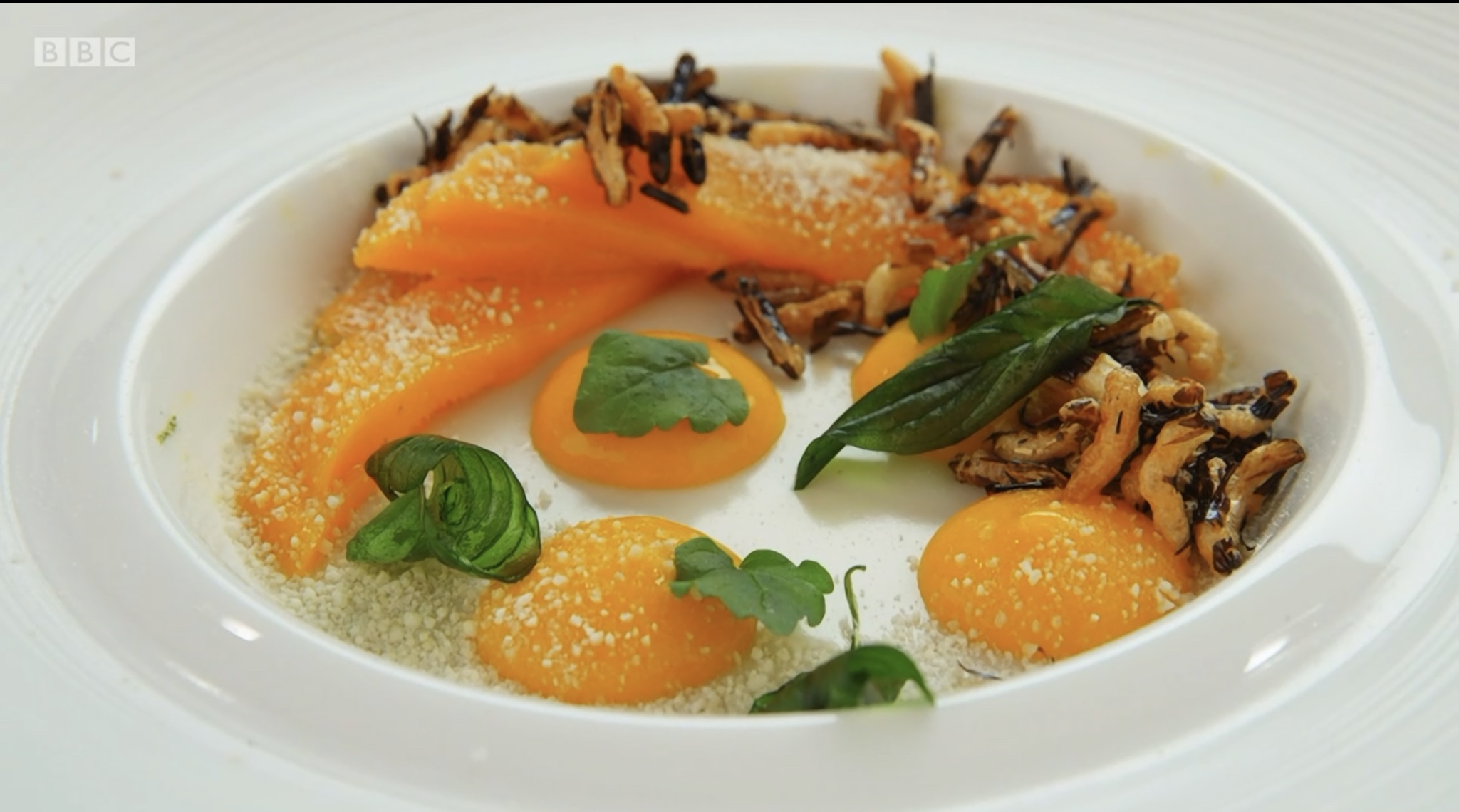
   The dessert was no less successful being, as the narrator Sean Pertwee described it, “a take on mango sticky rice” made up of a coconut and Thai basil panna cotta topped by compressed mango with lime and mango gel, puffed rice and toasted rice powder.

  Lee was the undisputed winner of the heat and it will be fascinating to see what dishes he delivers in upcoming episodes.


Sunday, 18 April 2021

142. A Spring Afternoon With Giles Coren.

 It’s a fine sunny mid-spring Sunday afternoon. I’ve exhausted the dog with a walk over Cofton Common (look it up) along a human-free public footpath, Upper Bittell Reservoir looking like a grand lake, in the distance, to my left the not-too-far off Cotswolds and straight ahead the close-by Lickeys where Tolkein’s and his fiancée used to meet each other (and if you can see behind them) the two-humped  Malverns.

  The perfectly warm sun made lunch in my rather old-fashioned garden (more neglected than it deserves but with camellias still in gay blossom, the fruit trees in flower and the first of the bluebells making everything as Tory as it should be) the only acceptable option. There’s a robin tweeting harmoniously in one of the damson trees and the dog is dozing comfortably despite a rival barking a few gardens away. 


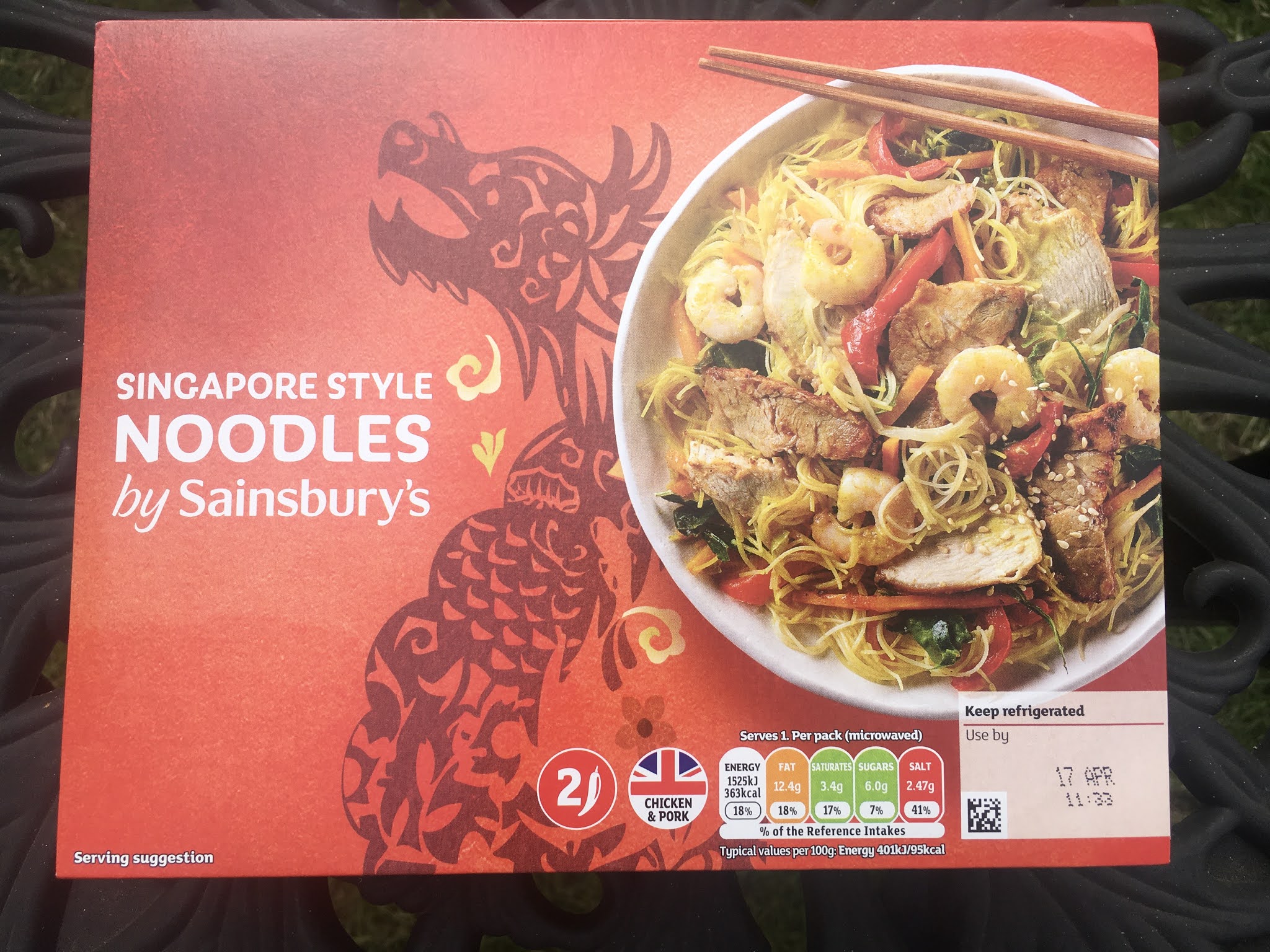
  Lunch is not what Sunday lunch should be - a finely crafted Tanqueray Seville orange gin with Mediterranean tonic  and microwaveable Sainsbury’s Singapore noodles. This is not an easy dish to prepare - do not trust the instructions, if you microwave the meat and prawns for anywhere near the time the manufacturers tell you to do then nothing but unhappiness results. Prawns of the consistency of bullets may be acceptable to the dog, a labrador who will eat anything whether or not it is unspeakable, but no human could derive pleasure from them, nor for that matter from the desiccated chicken and duck which results from following the instructions.


  So, lounging in the sun, who to sit round your garden table with? Today it was Giles Coren, the Times restaurant critic and television presenter (though he has acknowledged openly as a middle-aged white man he is unlikely to ever be employed by the BBC again). Coren, who annoyed so many people in 2015 (Blog 6) by announcing his dislike of eating in any English restaurant outside London, wrote a splendid book published in 2012 by Hodder and Stoughton titled How to Eat Out Lessons From A Life Lived Mostly In Restaurants which I have enjoyed before and now returned to. Perhaps it was the Seville orange gin which enhanced the pleasure of reading the opening chapters over lunch. It also had something to do with his reminiscences of his earliest love - Chinese restaurants - and the fact that I was consuming a faux Asian dish at the same time but I enjoyed a few guffaws and kept wishing that society had not taken a turn to ensure that Coren’s book, with its hilarious pokes at all sorts of foreigners, would surely not be taken up by a publisher today, almost 10 years on.

  His foody memoirs are a delight this second time around. There’s a sentimentality mixed up with an honest telling of how eating out was then and at earlier times. For those relatively new to dining out this is an education. My own tale goes back a further generation when children rarely ate out with their parents and it made me slow to observe what was going on in restaurants of which Coren twenty years later was all too aware. But our food experience of the 1950s and 60s when British food is said to have dived to the lowest depths it could is worth knowing about if only to appreciate what we have now. I can not however but feel a little envious of Coren and his earliest experiences which were unimaginable to children of one generation before. He was so aware as a child of his visits to restaurants and what was going on in them you know he was destined to be a food critic. Now if only I’d been born 20 years later. But as a dining companion, if only in print, it has been a tasty lunch eaten on a fine spring afternoon enhanced by his tales.