Saturday, 16 May 2020

94. Time Travelling Through The Michelin Guide - Croque-en-Bouche.


  I have an old nerd’s hobby - collecting Michelin Guides (yes really). I’m not completely obsessional about having to have every edition (though one day I may be) and of course my collection starts in 1974 when the British version began to be issued again after a break of 43 years - during which I suppose the Great Depression, the Second World War, Attlee’s determination to starve the British population whilst sending all the home grown food abroad, the 1950s and 1960s when people who had lived through the war were just happy to have food but were conservative in its preparation and sparing in its consumption and then the first inklings that food could be a little more interesting and even an enjoyable experience - when a guide to good food in Britain again seemed like a potentially useful tool to produce.
  As I yearn with increasing desperation to sit in my corner in Purnell’s, amused still by Glynn Purnell’s witty dishes and inwardly exuberant at the flavour of his creations or distressed by the emptiness of my life without experiencing the rebelliousness of Alex Claridge’s dishes at The Wilderness, where ever it is located when this is all over, or wistfully dreaming of another meal at Craft Dining Room or openly distressed at having gone so long without lunching at the near-gastronomic paradise that is Opheem or furious at being denied the chance to try out what Pulperia or Kray Treadwell’s new gaff will be offering, I need distraction and delving into Birmingham and the West Midlands’ recent gastronomic history by perusing the pages of old Michelin Guides is one of the ways I have found to achieve such distraction and consolation.
  And I keep discovering little facts which make that history more coherent. And fascinating. But those will only be revealed when I feel like it and they are no doubt known by others who’ve been enjoying dining out for decades. If only I’d realised the pleasure of good food when I was a lot younger. What tales I would tell.
  It seemed to me that a useful Michelin Guide edition might be that from 1994, Andreas Antona having opened Simpsons, the West Midlands wellspring, in 1993 - in Kenilworth of course, not Birmingham. Then there were only two three-starred restaurants in all of the British Isles - The Waterside Inn at Bray and La Tainte Claire in London. There were 8 two stars in the United Kingdom (7 in England and one in Scotland but none at all in the West Midlands) and just 47 one-stars (38 in England, 1 in Wales, 1 in Northern Ireland, 1 in Jersey and 6 in Scotland). Of the one stars only six were in the West Midlands - Lords of The Manor in Lower Slaughter, Bourton-on the-Water (Gloucestershire), Buckland Manor, Broadway (Worcestershire), Epicurean, Cheltenham (Gloucestershire),  Croque-en-Bouche, Great Malvern (Worcestershire), Mallory Court, Royal Leamington Spa (Warwickshire) and Oakes at Stroud (Gloucestershire). Even then the West Midlands’ Michelin Stars were heavily concentrated in Gloucestershire. None of the major cities were home to a Michelin-starred restaurant. If you lived in the West Midlands conurbation a meal at a Michelin-starred restaurant meant taking a ride out into the countryside and travelling some distance from home.
  Restaurants in Birmingham itself which were deemed worthy of a mention in the red book were:- Sir Edward Elgar’s at the Swallow Hotel on Hagley Road (4 crossed knives and forks) which I suspect was close to landing Birmingham’s first ever Michelin star several years before Simpsons arrived in the city to bring its first actual star, Sloans on Hawthorne Road in Edgbaston (3 k&f), Maharaja in Hurst Street (2 k&f), which I had long enjoyed visiting (what a shadow of its former self it is now), Purple Rooms (Chinese, 2 k&f)) in Hall Green, Henry’s in St Paul’s Square (Chinese, 2 k&f), Henry Wong (Chinese, 2 k&f) on Harborne High Street, Days of the Raj (Indian, 2 k&f) at Dale End and Franzl’s (Austrian, 1 k&f) in Bearwood, 

Maharajah, Hurst Street

Franzl’s Bearwood
Sloan’s Edgbaston

  Of the Michelin-starred West Midlands restaurants, one I will draw attention to here is Croque-en-Bouche in Malvern Wells which is an extremely important restaurant in the modern history of dining in the West Midlands because it was one of the three earliest of our restaurants, along with the somewhat shorter-lived Le Filbert Cottage in Henley-In-Arden (held its star for just one year) and The Dining Room at Mallory Court in Leamington (star awarded one year earlier in the 1980 Guide), being awarded a Michelin star in the 1981 Great Britain and Ireland Michelin Guide.

Estate agent’s photograph of the former Croque-en-Bouche.

  Croque-en-Bouche was run by the married couple Marion (the chef) and Robin (front of house) Jones (gastronomy’s very own Robin and Marion). It was opened in 1978 and was awarded its star 2 years later and held it until the couple retired from running the restaurant and closed it on 1 June 2002. Robin Jones originally opened a bistro in Lavender Hill in London in 1972 though he had no experience of the restaurant trade and employed Marion, a graduate of a Cordon Bleu course at a time when it was difficult for women to get to the top of the catering profession and romance bloomed and they were married in 1977. During their 2 day honeymoon in Bromyard they spotted the 24 room former baker’s shop for sale in Wells Road in Malvern and decided to open a restaurant there and opened Croque-en-Bouche in May 1978.
  Their former restaurant in Lavender Hill had been listed in The Good Food Guide but their new Malvern restaurant was a greater and rapid success. They received a star in the 1981 Michelin Guide and Croque-en-Bouche became something of a gastronomic Mecca for celebrities - a local newspaper recalled how the once fashionable actor Hugh Grant liked to visit the restaurant declaring it to be his “favourite” but in the same newspaper Robin Jones regretfully had to admit that, “I can’t even remember him coming.
 Half of the business proceeds came from Jones’ wine merchant business and much of the produce used in preparing Marion’s dishes were grown in the restaurant’s gardens which she thought was an important reason for the restaurant’s success. The article mentions that a dish served at the restaurant which was particularly celebrated was Marion’s frozen ginger and coffee meringue. The 1983 Michelin Guide notes the following dishes:- Crabe Bréhat, Pheasant ‘truffle’ with bacon and thyme (served October-February), Chocolate almond cake [Get in the Tardis now and set coordinates for Malvern Wells, November 1982]; 1987 Guide:- Soupe au pistou (served May-September), Crab mousse with a mango sauce, Leg of lamb with ginger, rosemary and soy [relocate Tardis, same spatial coordinate but now June 1986]; 1990 Guide:- Cannelloni with crab, avocado, coriander and tomato, Leg of lamb, roast as venison with a lovage stuffing and port sauce, Toffee rice pudding with wild strawberries (served July-September) [by now you know what to do with the Tardis - make it July 1989]; 1994 Guide:- Sushi selections, Roast leg of lamb with couscous, preserved lemon and pimiento, Salads and herbs from the garden. And finally to the 2001 Guide:- Crab and lobster croustade with bouillabaisse sauce, Japanese style selections, Salads and herbs from the garden. In the pages of the Michelin Guide the Tardis therefore travelled very nicely through what food was served by a great chef at Croque-en-Bouche in the glorious English West Midlands but also showed what was in and what was out gastronomically over those years.
  Croque-en-Bouche was mentioned enthusiastically among a handful of other British restaurants in a patronising commentary on British food by a writer in the The New York Times in April 1984. The writer quotes Somerset Maugham (I had not seen this before so it’s worth recording here to be squirrelled away when a derogatory comment about British food is required in the future and who knows, we may need it if the current triumphant British Food Hegemony is derailed by COVID-19) - “To eat well in England you should eat breakfast three times a day” (this is the correct quote not the bowdlerised version quoted in the New York Times).


  The estate agents who marketed the building which housed Croque-en-Bouche included in its sales literature the following “...For twenty four years until 2002 it was a Michelin star restaurant known as the Croque-en-Bouche. At that time almost a third of the garden was dedicated to the growing of vegetables and herbs.” Well it’s not everyone who can claim to live in a former Michelin star restaurant.
    Sadly I am unable to track down a photograph of Marion and Robin Jones.


  The BBC News website for Birmingham and the Black Country recently had an item featuring Stuart Deeley, winner of last year’s Masterchef The Professionals, in which he said that, despite the Covid-19 pandemic, he was still planning to go ahead with his new restaurant which he’d hoped to open in the early summer but has now been postponed until autumn of this year Coronavirus.
permitting. He still intends that it should find its home in Birmingham at a site he has already identified (in the Harborne/Edgbaston area).


  He was planning to have had a guest chef pop-up at Simpsons but that was due to have taken place after the Covid-19 lockdown had started and so had to be cancelled but he is quoted as saying that he is passing the time planning dishes for the new restaurant and writing recipes. 

Friday, 15 May 2020

95. West Midlands-Born Chef Wins Great British Menu 2020.


After eight weeks of devoted television viewing where we discovered for sure that what chefs think is great is exactly the opposite from what judges, representing the informed diner, think is great - and vice versa - except perhaps everyone can spot an irritating Scottish comedienne when they see one but are too polite to say, we learned that Stoke-born chef Niall Keating was the winner of the fish course in the 2020 Great British Menu and furthermore, so immaculate was it that it won him the title of Great British Menu Champion of Champions 2020
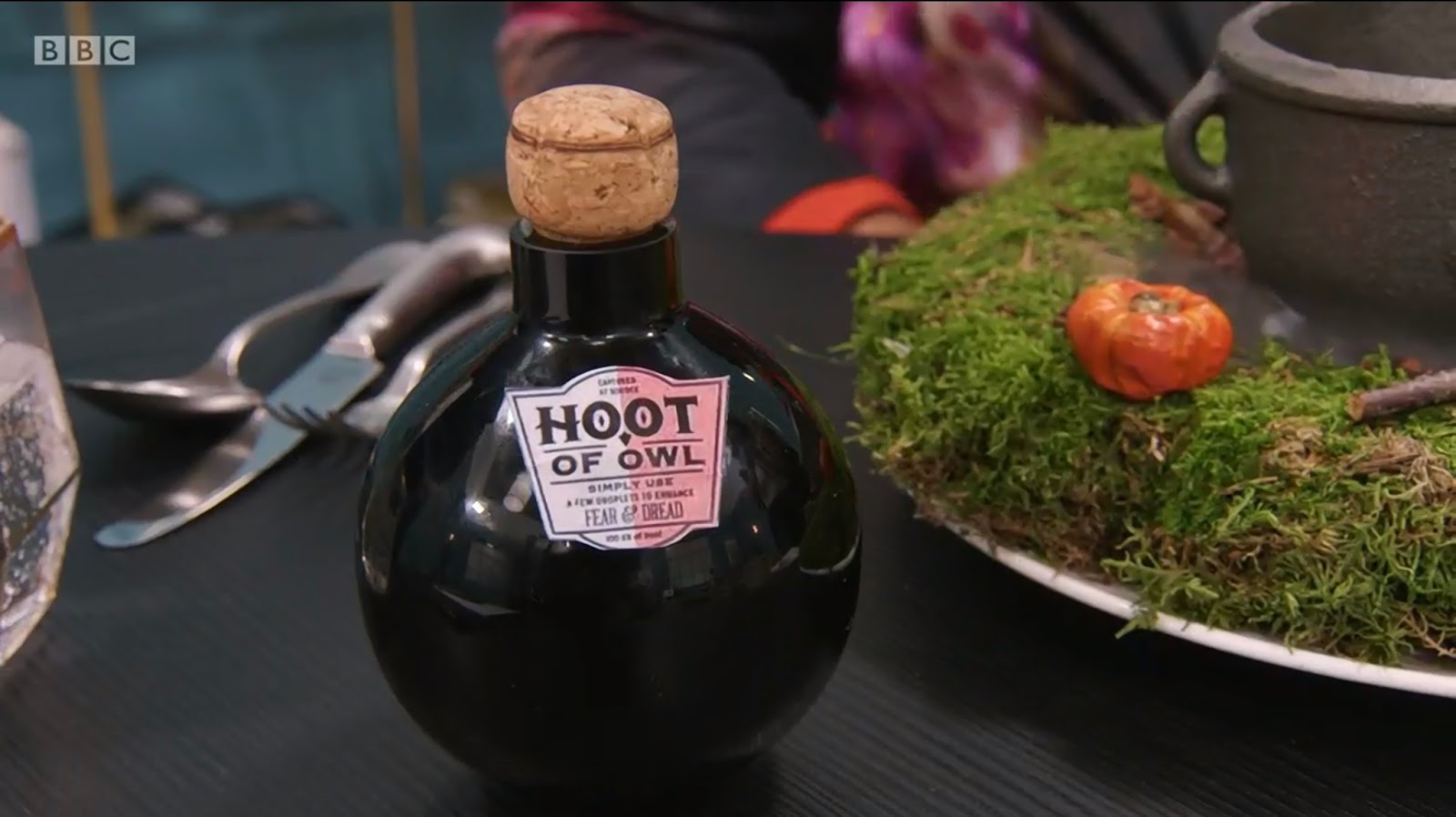
  He gave a commanding and stupendously calm performance in the GBM kitchen at the Banquet itself as he prepared 100 plates of his soon-to-be legendary Witches of the Northern Lights. The dish which was greeted in breathless wonderment by the diners and served in small witches’ cauldrons was made up of lobster and bone marrow with spring onion and chives and three squid ink-blackened tortellini with a lobster dashi. The dish and its title were inspired by the books of the His Dark Materials series by Philip Pullman.
  So a triumph for the West Midlander but not particularly for the West Midlands as he works at 2 Michelin-starred The Dining Room at Whatley Manor in the invented county of The Cotswolds (according to the BBC) which in reality means not south Worcestershire or Gloucestershire but Wiltshire which is definitely not in the West Midlands. It looks like he’s got a great job there but perhaps one day he’ll come back home to delight we Mercians if there is a restaurant scene left in the region for him to come back to.


Andi Oliver gives Matthew Fort a helping hand with his Owl Hoot

Owl Hoot poured successfully

4 contented judges
Preparing 300 tortellini for the banquet

Quite a lot of lobster and bone marrow tortellini


Monday, 20 April 2020

93. Restaurants “Will Be Among The Last To Exit Lockdown”.

  In a television interview, the senior government minister, Michael Gove, said, in response to a question he was asked in an interview, that “it is true that areas of hospitality will be along the last to exit the lockdown, yes that is true, they will be among the last ....”. Grim news indeed though not surprising nor even shocking.

“Areas of hospitality will be among the last to exit the lockdown”

  Which restaurants will survive this predicted very prolonged period of closure in Birmingham and the West Midlands remains to be seen but it looks as though a grave prognosis for the industry must be given at this stage. The one good piece of news is that our local notable restauranteurs are clearly people of steel who have risked much to open, build up and keep their restaurants going through good times and bad and so in the medium to long run I expect that they will lead the charge back to restoring our shining local restaurant industry and taking it to even greater heights.

  In Blog 90 I described the first Central region heat of the 2020 Great British Menu and focused on how Birmingham’s own Alex Claridge fared in the heat. As we know with his somewhat radical menu he did not survive to demonstrate his main course and dessert course to the guest chef judge who right from the word go seemed to signal who was going into the regional final so it was not surprising that after the main course, “pre-pooding pooding” (as the ghastly comedienne chosen to  host the programme insisted on repeating endlessly) and the “pooding” - dessert to you and me - Dom
Robinson who was brought up in Derbyshire but works in Berkshire was eliminated from the competition. It’s fair to say that the two remaining competitors made a good fist of the Central region final but not at all surprising that Niall Keating (“proud to be doing this for Stoke” but works in Wiltshire) won out against Sally Abé (born in Mansfield but works in London). It has to be said that some of the dishes in the final looked wonderful and the welcome faces of the usual judges, though the comedienne did her best to hog the screen, told us just how good the dishes tasted.
  In subsequent regional competitions the producers of the programme seemed to have realised just what an awful decision it was to have the comedienne host the programme and her time on screen seems to diminish more and more as the weeks go by. Unfortunately she still manages to squeeze the highly unhilarious “pre-pooding pooding” words into at least one programme per week. The programme retains its delights however - hilariously Oliver Peyton has become even more of a grumpy old man than Matthew Fort and their little squabbles continue wonderfully though not enough airtime is given to them and I hope if another series is made that the comedienne will be banished back to whatever comedy club she came from and that GBM’s own Waldorf and Statler will be given much more time on the screen so we can hear one or the other deliver those immortal words, “I don’t like it” as they pick at yet another over-complicated dish set before them.

  And so we wait to see how long it will be before Covid-19 is sent to bed with no supper and not allowed to get up in the morning. And while Covid-19 is being seen off the premises perhaps the GBM producers could take the programme back to a simpler time when there were no guest chef judges, no comediennes, no pre-pooding poodings, the chefs needled each other a little more rather than plating up their rivals’ dishes for them and Anthony Worrall Thompson burned his faggots’ bottoms.

Anthony Worrall Thompson, Great British Menu, series 1, 2006

Worrall Thompson’s burnt faggots.


Friday, 17 April 2020

90. Alex Claridge In The Great British Menu


  The present season of the BBC1 television programme, Great British Menu, slides along through its latest 15th season showcasing chefs who work mainly in London restaurants but who claim to represent (with pride of course) various regions of The United Kingdom by virtue of having been born there, or having been brought up there, or having attended college there, or having a second cousin-in-law three times removed who lives there and so on. Their pride in the region with which they have these various connections and which entitles them to represent those particular regions does not of course extend to them working there and boosting those various regions’ economies by contributing to the local food scene. The pit of London draws them in and those who were once ‘One eyes’ (according to that discerning critic Giles Coren) are transformed into great chefs by virtue of working in that grubby city and privileged BBC luvvies are able to consume their food at highly inflated London prices which a BBC salary paid for by the television license fee will easily cover. Having grazed there they will then go off and complain about the government’s approach to social inequality and deprivation.
  But lo! The very first episode features a Brummie chef who actually works in Birmingham and struggles passionately to keep his restaurant afloat despite the slings and arrows of outrageous gastronomic fortune and whose dishes perhaps are rather (some of them at least) outrageous. As already revealed in Blog 87, I refer of course to the chef in The Wilderness, Alex Claridge.
  The first episode kicked off with the shocking revelation that there were not three chefs representing the Central region this year but four which made for pretty heart-pounding television viewing, I’ll tell you. And also there was the added drama of them having to prepare an amuse bouche for the first time ever in the competition’s history, one’s pulse rate raced with the revelation. That amuse bouche might be more important than you think as it was stated that if there were a tie then the performance in the amuse bouche section would be decisive in deciding the winner. Golly! Never has so little meant so much to so few. Interestingly as the weeks have gone by, that pesky amuse bouche section has proved a great trouble for many of the chefs who seem to view it as a starter judging by the large amount of food they have put into their a.b.s one or two of which have been positively gargantuan.
  The other shocking revelation at the start of episode one was that an extremely irritating Scottish comedienne was hosting the programme and hogging the cameras beyond tolerability. Although she ruined the Central region heats it seems that the producers have recognised the error they made in deciding to put her in the programme and, like Alice, she seems to be gradually disappearing as the series goes along. Which is good for my stress levels which rose with the irritation I experienced every time she appeared on screen and opened her mouth to make yet another fatuous remark. Now if only Radio 4’s Today programme could do the same and make Martha Kearney and Nick Robinson, especially Martha Kearney, disappear in the same way then balance will have been restored to my life and it will be far more easy to deal psychologically with the current pandemic.
  But back to the amuse bouche. Alex Claridge’s bavette beef tartare with Parmesan custard, gherkin ketchup, crispy onion and pickled shallots was placed last by the mildly bumptious guest chef-judge, Paul Ainsworth, and you really couldn’t help getting the feeling that the result of the competition was already decided. Though it’s fair to say it did look rather more like a small starter than amuse bouche. 


“I hope it won’t be me that skidaddles after the fish course”
  And so, on to the starter. The dishes this year are to be based on books for children hence marking, rather obtusely, the Bicentenary of the publication of Dickens’ Oliver Twist which, so the programme tells us, features the first child hero of a novel. Alex Claridge chose to base his starter on Roald Dahl’s Revolting Recipes which isn’t too promising a premise for a starter at a banquet. He named the dish Nah You’re Revolting. OK, that’s different. At this stage I began to have the feeling that we might be in for another extreme modern dish as was delivered by Kray Tredwell in the Midlands heats last year. And indeed we were though possibly one step beyond. The dish was centred on a ‘modern take on butter chicken’ rendered this time in the form of Norfolk quail marinated in a yogurt and spice mix making a butter chicken sauce and served with coal oil produced by using squid ink, a coconut and lemon grass gel and, instead of rice, roasted meal worms and crickets, which Alex Claridge promised would be “crunchy, salty and spicy”, and a spring onion and wood ant emulsion. Thus Claridge was opening up the new cuisine of insectivorous dining. A step too far for me I think. He foresaw great excitement among the children at the banquet but I have the feeling that there might have been a few plates sent back untouched. I’ve had ants at his restaurants before - impressively citric without a doubt but to be picked at with hesitation rather than joyfully swept up into one’s mouth - and crickets before (weirdly slotted into an otherwise very edible dessert) which I did not find at all pleasant but I would surely draw a line at the exquisitely unappetising mealworms whether or not they were crunchy and spicy.


The pleasures of insectivorism 

Meal worms, a vital ingredient of Nah! you’re revolting!

Discussing the starter

The face of a comedienne who has just tasted a spring onion wood ant emulsion.

The starter scored 6 out of 10. And it wasn’t because of the insects. Indeed not. Like any cool, up-to-the-moment, hip chef Ainsworth embraced the insects. “Alex,I like your theme. It’s controversial.  Really like that you added locust bhaji. Best thing on the plate for me. The quail was cooked well and the butter chicken sauce really nice. The ants brought acidity and I thought it had a nice earthiness with those mealworms too. What I didn’t understand was the squid ink and coal oil. Too overpowering. Completely killed the dish. It’s good to embrace the brief, alright? but, in my experience, less is more”.

“Alex, I’m giving you 6 points”

  Oh well, there’s always the fish course at the end of which the lowest scoring chef will be sent home and not allowed to cook his/her remaining dishes.
  Alex Claridge’s fish course was called Goth Apple taken from a book by a Black Country writer, Susan Price and with a heavy Japanese element to it.


  The dish was made up of wasabi emulsion, scallop slices cured in bonito vinegar with discs of mirin and pressed apple, crispy salmon skin, dashi vinegar-pickled cucumber balls, apple skin powder, dashi ponzu (made from soy, apple juice and mirin), and garnished with sea purslane and apple blossom and served with caviar and a white chocolate skull filled with apple ponzu. A remarkable sight on the plate but not perhaps quite as startling to those of us who have had the pleasure of meeting Alex Claridge’s chocolate skulls before (though never I think with the fish course).
  Ainsworth awarded the dish 8 points while the 3 other chefs’ main courses all received 10 points. Claridge was going home. Ainsworth said, “Alex, your dish, Goth Apples, the white chocolate skulls, they were incredible, really inventive, loads of fun, fantastic. The scallops, they were the right choice of protein for that dish. For me though there was just one thing that’s all, it was that wasabi. It just overpowered everything else”.
  I should have liked to see what Alex Claridge was planning to bring to the table as his main and dessert courses not to mention the “pre-pudding pudding” as the comedienne was constantly babbling about. Perhaps he will appear again next year. Ainsworth stated, after the points were delivered, “You have an unbelievable wild style and you know what? don’t change. You are an absolute talent”. Wild style? True but there’s a bit more than that to our local chef.

“Alex, I am scoring you 8”
  One final illustration:-

Irritating beyond imagination.

Tuesday, 14 April 2020

92. Food In The Time Of Covid-19.

  For anyone who doesn’t get the literary allusion, and I’m sure all readers do, the title of this Blog rejigs the title of the novel by the Colombian writer Gabriel Gárcia Márquez, “Love In The Time Of Cholera”. What goes around - eventually - comes around. For ‘Cholera’, substitute ‘Coronavirus’.
  Restaurants and their chefs and owners are dealing with the total close-down of dining establishments throughout the United Kingdom in different ways.
  Glynn Purnell, for instance, is delivering medications to the homes of people who need the service in his childhood home of Chelmsley Wood according to an article on the BirminghamLive website. It states that, “.... that’s been a good way of forgetting about the stress of wondering (if ) his two city centre businesses will survive the ongoing pandemic lockdown ordered by Prime Minister Boris Johnson on Monday March 23. That move came just three days after the government had ordered the shutdown of all pubs, bars, restaurants, cinemas, theatres, gyms and leisure centres from the night of Friday March 20”.
  “Glynn .... said “Looking after people’s health comes first and we hope we can all come out the other end. And if my businesses go belly up I will still have the spirit to start from scratch all over again - there will definitely be some sort of Purnell’s in the city centre in the future. ..... But what will happen when this is all over? Will people still want or have the money to come back out to eat in a restaurant? If they are still worried they might not want to come out. Hopefully I’ve got enough cash to furlough my staff”.”
  And that’s the rub ... uncertainty.


  Each week that goes by the financial situation grows worse for almost everyone. If the lockdown goes on for too long then businesses run out of money and collapse and many potential customers also find their private finances collapse to a level where they can no longer afford to dine out even if they would like to do so. The elderly - most at risk - may well feel it is safer not to risk going out to dine even if they they have the money to do so from their pensions and with many more deaths occurring in these older age groups some regular customers of many years standing may well have lost their lives to Covid-19 (which seems to be dining out very well at present) though it is true to say that the most at-risk group - those aged over 70 - are not to be seen to frequently dining out at city centre fine dining establishments.
  Hope springs eternal in the human breast. 
  Meanwhile chefs around around the country have been cooking special meals to provide a service to front-line Health Service workers and others have attempted to set up and run home delivery services as a means of keeping their businesses going. I have just had 2 very enjoyable Easter lunches cooked in carvery style (not Fine Dining by any means but pleasingly delicious all the same) delivered from The Old Rose And Crown Hotel in the Lickey Hills which was an 18th and 19th century coaching inn.  How delightful it was to have a tasty freshly cooked meal delivered to my home after these last 3 weeks of making do with what I felt up to providing for myself. Oh the joy of Roast beef and Roast turkey with all the trimmings even though my prentstion of the food on the plate could hardly be described as ‘Cheffy’.


The Old Rose And Crown

  Signs of the times:-

 Adam’s:-

Purnell’s Bistro:-

Simpsons:-


Harborne Kitchen:-


Carter’s Of Moseley:-


Le Champignon Sauvage, Cheltenham:-


Salt, Stratford-upon-Avon:-


Thursday, 9 April 2020

91. The Lights Go Out.

  On Friday 20 March 2020 the lights went out all over England though we hope we shall see them lit again in our time.
  In the face of a rapidly worsening situation in England due to the Coronavirus (Covid-19) pandemic and based on the evidence of epidemiological modelling which predicted a vast number of deaths in the country if urgent action were not taken to severely reduce social contact between individuals which would spread the disease, the Conservative government led by prime minister Boris Johnson, announced that all restaurants, bars and public houses throughout the country should close immediately. The lights literally went out. Two days later, on Monday 23 March, the entire population except for those employed in the National Health Service and other vital services and businesses, were ordered (effectively) to stay in their own homes except for a few reasons, which did not include going out to dine, to greatly restrict social contacts.
  These actions came as a great blow to the food and service industry, the ultimate outcome of which is yet to be known. The government announced that it would pour many billions of pounds into helping to preserve viable businesses throughout this period of ‘Lock down’. How successful these measures have been will only be obvious to food lovers here in Birmingham and the West Midlands when these awful times are over and we see how many of our restaurants have survived. It’s likely that many much-loved businesses will be lost.
  The same can be said for the diners themselves. Many diners who visit fine-dining restaurants are older, but rarely extremely old, because they have reached a stage in their lives where they can afford to dine there. Men over 50 seem to be particularly at risk. I fit into that particular group (well obviously, after all this is called ‘An Old Bloke’s Perspective’), I have every intention of taking as much care as possible of myself so that in a few months time I can be out again and savouring the delights at whichever of Birmingham’s wonderful food businesses survive.
 Some of the effects of the crisis:-


  In Blog 83 (dated 27 February 2020) I mentioned that Kray Tredwell was planning to open his new restaurant in the Custard Factory in Digbeth about May this year and he intended to pitch the price of meals so that younger less affluent people might be able to dine there (good but not every young person I see in restaurants is short of a bob or two). This news was reported on The HardensBytes. site several weeks later - well we can’t all be first with the news - but, not surprisingly, pointed out that the opening would be later in the year due to the current restrictions. Let’s hope all goes according to plan.