Birmingham is the unofficial capital of the West Midlands so it's worth thinking about the notable dining establishments in the other counties that make up the area - Warwickshire, Worcestershire, Shropshire, Staffordshire, Herefordshire and Gloucestershire - some may say the latter is in the West Country but I think that is only true in the far south of the county around Bristol.
Birmingham today of course is in the artificial county of West Midlands, invented as recently as the 1970's, but those of us with enough wrinkles on our foreheads will always think of ourselves as Warwickshire lads and that's the end of the matter. There's also the county of Borsetshire, beloved of fans of The Archers, and some of us can name dining establishments in that county but, alas, they are only fictional!
I love to visit other towns of the West Midlands and am usually accompanied by my dog which means I become particularly familiar with dog-friendly hotels and the restaurants housed in them but my visits also give me chance to learn more about the culinary history of the places and to test out what they have on offer.
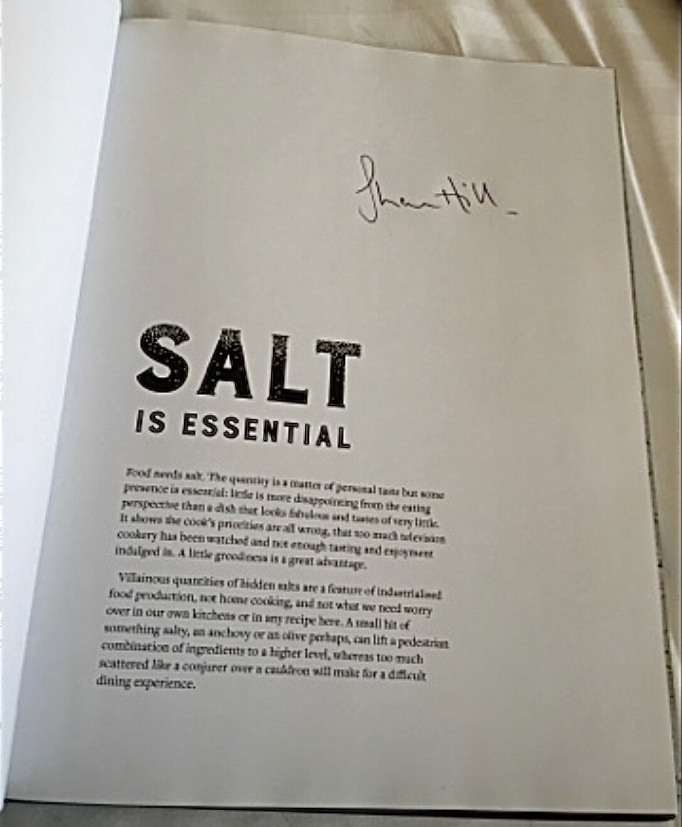
The importance of the town of Ludlow, medieval capital of the distant Welsh Marches, its castle looking out over Shropshire and itself in the shadow of Clee Hill, in the modern gastronomic history of Mercia can not be overstated. It was here in 1994 that Shaun Hill opened The Merchant House in a private house which he transformed into one of Britain's most respected restaurants.
He worked as the only chef in the kitchen, having begun his career working for Robert Carrier in Islington, and the kitchen at The Merchant House was so small that he could only work with 3
saucepans at a time. Nevertheless Shaun Hill was awarded 1 Michelin star in 1996 and the 24 seater restaurant retained it until Shaun Hill closed The Merchant House to move on to other objectives.
Although being advertised internationally no-one could be found to take on the business and no other restaurant was subsequently opened at the site but for food lovers who want to visit this shrine of Midlands gastronomy the private house there towards the lower end of Corve Street continues to have the restaurant sign hanging outside as shown in the photograph at the head of this piece.
 |
| Shaun Hill |
In 2000 Claude Bosi opened Hibiscus in the building which had housed Ken Adams' Bib Gourmand-winning "The Oaks", not far from The Merchant House in Corve Street and was awarded a Michelin star the following year. A second Michelin star was awarded to the restaurant in 2004 but in July 2006 Bosi announced that he was selling the restaurant and moving to London. It looked as though Ludlow's position as a somewhat unlikely gastronomic Mecca was coming to an end. It is interesting to note that Glynn Purnell worked for a few months with Bosi at Hibiscus.
However the property was sold to Alan Murchison and reopened under the name La Becasse (the Woodcock) in 2007 with Will Holland as the Head chef. It was awarded a Michelin star in 2009 just 18 months after being opened despite being described as "a bit Froggified" by Shaun Hill to Jasper Gerard in The Telegraph in 2009 or maybe because of that description. Holland left La Becasse in 2013 to become the Head chef of Coast in Pembrokeshire and Alan Murchison sold the restaurant with the new owners employing Chris O'Halloran as Head chef. The restaurant won the award "Best European Restaurant in England and Wales" at the Creative Oceanic Awards ceremony held in Manchester in 2014 beating, among others, Simon Rogan's "The French" in Manchester.
However the restaurant group which owned La Becasse ran into financial difficulties and was closed in January 2015.
 |
| Claude Bosi |
 |
| La Becasse |
The restaurant was reopened, with support from the Bosi brothers, as Mortimer's" in October 2015 by the new Head chef, Wayne Smith, and his business partner Andrew Brooks who manages the restaurant; Brooks had worked at the Charlton Arms which was owned by Claude Bosi's brother, Cedric, and Wayne Smith had worked with Claude Bosi at Overton Grange Hotel. The cuisine served at Mortimer's is described as "Modern British/French".
I have not yet had chance to dine at Mortimer's but intend to do so before the year is out.
Ludlow had a third star in the firmament in the form of Mr. Underhill's. The restaurant, owned by chef Chris Bradley and his wife Judy, began its life located in Suffolk in 1981 and was named after the couple's cat, Mr. Underhill, whose name originated in the pages of Tolkein's The Hobbit. The Bradley's moved the restaurant with rooms to Ludlow in 1997 and was awarded 1 Michelin star in 2000 which the restaurant retained until it closed on 20 December 2015.
I once tried to make a reservation at the restaurant for dinner but although a promise was made to phone me back about it nearer the date no such call was ever made and frankly, I couldn't be bothered to try again. The problem was that tables were mainly saved, quite reasonably, for those people staying in the guest accommodation and I realised that a dog would not be allowed to accompany me if I stayed there (well it was named after a cat!)
Presently no restaurant in Ludlow possesses a Michelin star but the charming Green Cafe opened at Dinham Mill on the site of a former swimming pool in 2009 was awarded a Bib Gourmand in September 2015.
I have visited the cafe several times in recent years and have found my visits to always be very pleasurable - sometimes just for an excellent coffee perhaps consumed alongside the cafe's sourdough toast (today plastered with fabulous homemade lemon curd) (possibly the best lemon curd in the world) and sometimes for an always delicious lunch, sitting outside with Lucy The Labrador, enjoying the sun and the beautiful view - ducklings swimming along behind their mothers, countless labradors plunging into the river Teme, the overpouring of the weir and all overlooked by Ludlow's mighty medieval castle. No-one could deny this lovely little place, with its always friendly and charming waiting staff, its Bib.
The Chef-patron is Clive Davis.
The Charlton Arms on Ludford Bridge was opened by Cedric Bosi in 2013 and is a pub with rooms. Pleasingly it is also dog friendly. Pubs really do look good with a black labrador sprawled on the floor looking dozy but alert to the presence and potential availability of food. Doubtless some other breeds, equally aware of the presence of food, look good in traditional pubs. Having said that, I still haven't made it to the Charlton Arms but it's on my list of things to do.
Lucy and I stay at the beautiful Fishmore Hall Hotel which is located in a rural setting on the edge of Ludlow and which, obviously, is dog friendly and has its own fine dining restaurant, Forelles. The hotel itself was opened by Laura Penman in 2007, the Georgian building having been restored from its former derelict state. I love to lounge in the delightful sitting room with the dog lying comfortably by me - I feel like a character out of an Angela Thirkell novel.
The hotel has an area which is called the Brasserie though its role is rather flexible and a bar with a number of rather good gins on offer. Forelles itself is situated in the extension to the side of the hotel and it gives a feeling of lightness as well as a wonderful view of Clee Hill. The staff are very friendly and delightful and keen to help the diner.
The wines on offer are excellent and the three course meal, with its added sourdough bread (crispy and tasty), amuse bouche and pre-dessert, offers a good choice of food prepared by the Head chef, Andrew Birch, who took over the kitchen at Fishmore in 2015. There is also a 6 course taster menu but in my dotage as I am that is just too much of a good thing for my poor shrinking stomach to deal with.
Fishmore Hall's first Head Chef was Marc Hardiman and he was succeeded in 2009, having earned the hotel a fine reputation for its restaurant, by David Jaram who had worked with Hardiman since the opening of Forelles. Andrew Birch came to Fishmore Hall having won the awards of Young Chief Apprentice of Britain and Young Chef Apprentice of Europe 2005 as well as being a finalist in the Roux Regional Scholarship 2006. He had been the Senior sous chef at the Montagu Arms in Hampshire. Andrew Birch was one of the contestant chefs in BBC's Great British Menu series 11 in 2016.
I have dined at Forelles a number of times and it is hard to fault the quality of the cooking which is usually perfectly timed and perfectly seasoned. Chef Birch has a great ability to hit the diner with unexpected flavours which sometimes are highly successful and other times less so. He is currently serving an excellent halibut dish but with an extremely sweet sweet potato purée which to me at least does not work with all the other ingredients on the dish. I have also recently had perfectly cooked lamb served with a viciously powerful garlic pesto which, in truth, seemed far to overwhelming. Forelles is currently something of an adventure but very enjoyable.
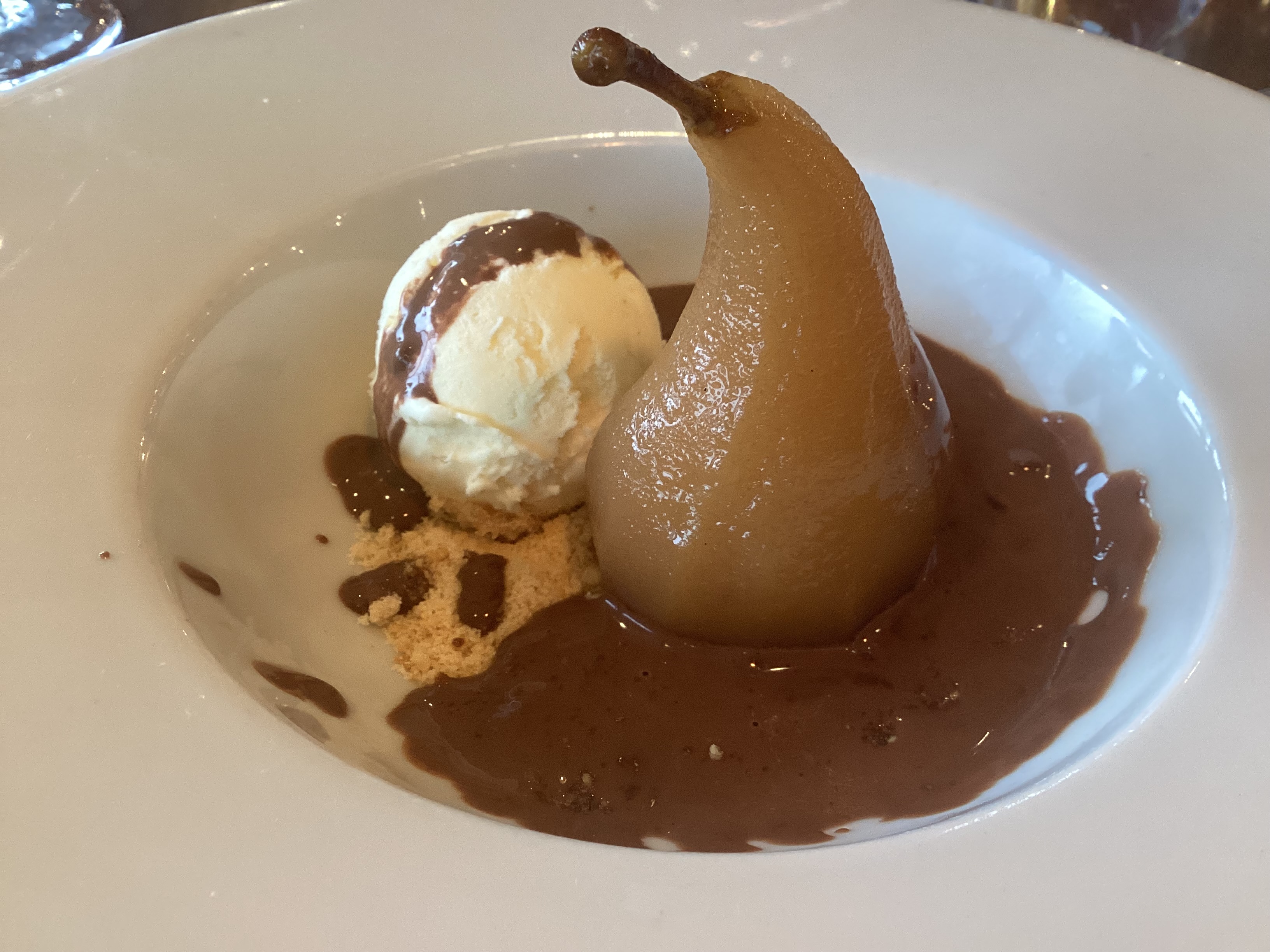
Memorable recent dishes are the scallops with smoked chicken and a white chocolate cheesecake with elderberry sorbet which is clearly a dish sent to Andrew Birch directly from Heaven above. The quality of the cooking is highly consistent and I love the way Andrew Birch uses very unusual ingredients. The above mentioned halibut dish, for instance, was accompanied by lovely wild asparagus. I like his pragmatic approach to ingredients - he serves locally sourced food but is quite prepared to use ingredients from further afield if the end result is the optimal outcome. Sometimes localism of ingredients can get a little silly - I think back to last year when a friend with whom I was dining at Birmingham's The Wilderness was told in reply to his request for a slice of lemon with his drinking water that the restaurant did not use lemons because they were not local produce but if he wished, a citrus-tasting wood ant could be provided to achieve the desired lemon flavour in his drink! One imagines that there is none of that sort of nonsense taking place at Forelles!


And so, to the Ludlow Food Festival, held the second weekend of September every year in the grounds of Ludlow Castle. From the dog's point of view the highlight of the event is the "Sausage trail" in which crowds of visitors wander around the town stopping at various stations where different butchers are waiting to serve their prized sausages on sticks to the assembled consumers who then judge their favourite. There were six different sausages on offer last year which was a great pleasure to Lucy The Labrador who had her own ticket and was therefore able to not just sample one of each sausage herself but was offered extra pieces by some of the vendors and was also not averse to mopping up any bits of sausage dropped in the streets. Those who fear for her health need be reassured by the fact that she did not participate in the "Bread trail" or the "Ale trail".
The Festival itself remains very well attended but is, for the present at least, past its golden age. Many of the stands are devoted to the sale of trendy gins and unending varieties of chutneys and relishes. But it's still fun and Lucy does not mind a half hour in the dog crèche while I wander around the main marquee.
Ludlow remains a place for the food lover to visit and I suspect that all it will take to get things really moving again is the falling to earth of a (Michelin) star somewhere in the town. We'll see. There are people working hard in the town who make make that possibility a reality. In the meantime there's plenty of excellent food to be tracked down and the town is so attractive that the hardened food lover can not help but like the place for one of those reasons or the other.
 |
| A group at the Ludlow Food Festival Sampling A Local Dessert |