Monday, 15 March 2021

132. Dinner At The Grand, 1937 Style.


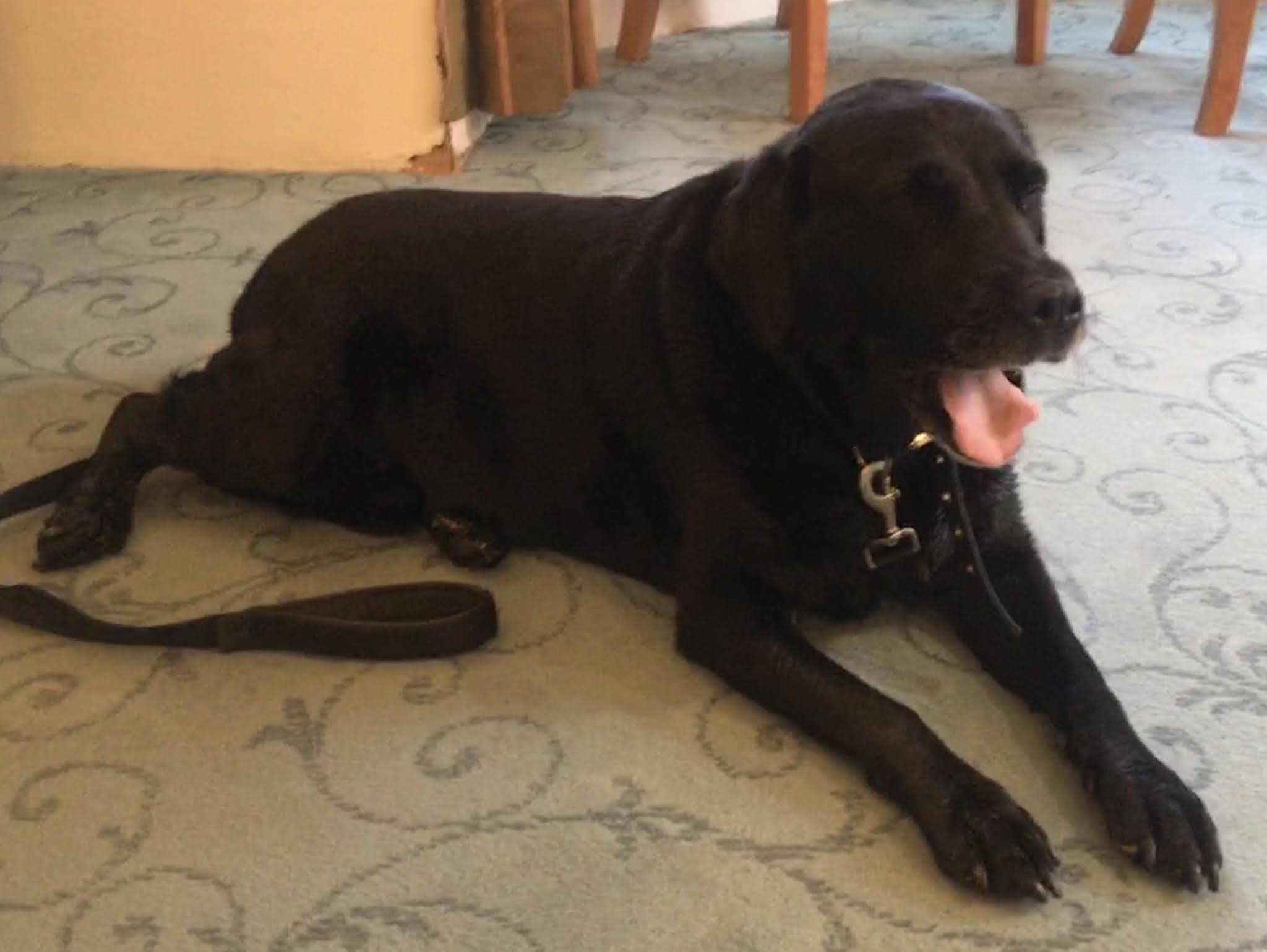
  The dog and I are planning a grand re-entry into society when the restrictions associated with this current lockdown, endured as it is through a miserable, grey spring - the spring flowers are there but the sun makes only rare appearances, the skies are the colour of battleships and the gusty winds are chill - and as soon as we may, we will be off for a very civilised few days staying at Fishmore Hall in Ludlow returning for a birthday weekend dining or lunching with the appropriate number of dear old friends on successive days at Opheem, Purnell’s and Simpsons. Prior to that in late April, as outdoor dining becomes possible, it’s off to the Craft for dining around the fire pit. Reserved already too is lunch at The Wilderness  and the year, or what is left of it, lies spread ahead of us.

  The birthday weekend will not only be special because of where I shall be eating but also because of where I will be staying with my canine best friend - the finally refurbished and newly reopened (having closed in 2002) Grand Hotel in Colmore Circus. It’s wonderfully dog friendly and a splendidly short distance from Purnell’s and Opheem so there is no great amount of travelling to be done after an evening of gastronomic self-indulgence. And it does seem to me that staying at Birmingham’s great historic hotel as it reopens really should be quite exciting. Some of the publicity photographs seem to suggest that the hotel will once more be correctly named ‘The Grand’.


 In Blog 16 I wrote a piece about a banquet at The Grand in 1896, 17 years after the hotel first opened in 1879, after obtaining a menu for the event. And very grand it was too. Sadly I have still not come across anyone offering Nesselrode pudding, invented by Carrème himself in 1814, but one lives in hope.

   I have obtained another The Grand menu from a later age to give us an idea of what was ‘in’ in Birmingham cuisine in 1937, just two years before the start of the Second World War was to set back British cuisine for at least two generations. The menu with a pleasantly Art Deco illustration on the front cover of a smartly dressed waiter holding aloft a tray with two cocktail glasses and a blue bottle and colourful gay balloons and streamers is for the rather unlikely sounding Building Trades Exchange And Club dinner held on Monday 15 February 1937 so we might expect that the attendees were well off financially and probably middle class parvenus in the main with the money but not necessarily the tastes for 1930s fine dining. 

  So what were they served? The menu is headed Diner with one N though whether or not our builders thought it was a spelling mistake or appreciated the sophistication of having a menu in French even if they could not be sure what food was to be served to them, we may only guess.

Hors D’oeuvres riche Saumon fumé 

Consommé Brunoise Royale  Crème à la Reine

Saumon Poché  Sauce Hollandaise

                Concombre

Supréme de la Volaille Jeanette

Sorbet au Champagne Fine

Selle d’agneau rôti   Sauce menthe

         Petits pois au beurre

          Pommes nouvelles


Poire glacé Beatrice

      Mignardises


Dessert

Café Moka 

  We may conclude from this that one thing was for sure - the organising committee of the Building Trades Exchange and Clubs might have been prepared to have the menu in French but they were determined to stick with very British cuisine - smoked salmon, vegetable soup (albeit a classic Escoffier dish), poached salmon, jellied chicken (possibly a little more exotic than the rest of the menu for the 1930s English building company director), roast lamb with mint sauce, peas and new potatoes, a pear ice cream and petits fours.

  What stands out for me here is that soup, which we rarely receive in fine dining restaurants now, occupies its deserved place on the menu. Of course, the Roux Brothers insisted on always including soup in the menu when they opened Le Gavroche in 1967 (though now the next generation has taken over there I see no soup on any of its present day menus including its alluring Menu Exceptionnel) and then at the Waterfront Inn and I would rather like to see magical soups as courses again here in our Birmingham restaurants. One can see that our Japanese-, Peruvian- and Scandinavian-inspired young chefs might see soup as a thing of a bygone age but there’s room there for someone to revive a happy course in a modern idiom.

  Well, we will see what the post-COVID era brings with it and how our chefs have been using their time to evolve and enhance our local gastronomy. Meanwhile I look forward to my first stay at The Grand.


No soup for this gavroche.


Thursday, 11 March 2021

133. Great British Menu 2021.


 The BBC series, Great British Menu, which, though I frequently moan about it, is unmissable for me returns to television screens on 24 March 2021. As we might expect from previous experience, the Central region (the great swathe of the West and East Midlands plus East Anglia) is poorly represented both by the number of competing chefs chosen to appear in the series and by the Central region’s restaurants showcased. Thus the chefs of only two West Midlands restaurants are to appear in the series while the other two featured in the Central heats actually work in London restaurants. I suppose the West Midlands has done well to have two of its restaurants highlighted given that BBC luvvies seem so unwilling to make programmes here (even Peaky Blinders is made improbably in Manchester which must be a pain to the dears who work for the BBC given that the city is, certainly to extrapolate from its Michelin star ratings, a virtual gastronomic desert).


  The competing chefs in the Central region heats will be Sabrina Gidda, who qualifies by having been brought up in Wolverhampton but who actually works at The AllBright in London (this will be her third attempt), Shannon Johnson who was brought up in Lincolnshire but who also works in London at Hicce, Stuart Collins who opened Docket No. 33 in Whitchurch in Shropshire in 2017 where he is Chef Patron and Liam Dillon from Lichfield where he has been chef owner of the Boat Inn since 2017.

  Meanwhile the series returns largely unchanged except that it has ditched the irritating comedienne, Susan Calman, as presenter, a role which Andi Oliver takes over after making a fair fist of doing the job in the 2020 Christmas series. Meanwhile Rachel Khoo replaces Andi Oliver as the third judge while Waldorf and Statler otherwise known as Matthew Fort and Oliver Peyton continue their pleasingly eternal roles as judges dating back to time immemorial. Wikipedia describes Khoo as “a British cook, writer and broadcaster, with her own BBC and Food Network television cooking series”. So that’s alright then.

  The theme of this year’s series will be ‘British innovation’ and commemorates the 30th anniversary of Sir Tim Berners-Lee’s making the worldwide web available to the general public. Pre-programme publicity predicts that we will see more than our fair share of all that is grim in modern gastronomy - numerous instances of molecular gastronomy and more than enough dishes cooked sous vide. Our Lichfield chef, Liam Dillon is said to be preparing a dish recalling Dr Johnson, a resident of the city and father of the English dictionary, so one hopes than Dr Johnson will not be forced whist sitting at his dining table in Paradise to express to his companion, Mr Boswell, an honest opinion after being served a dish cooked sous vide, which after all isn’t even English and really should have by now been fully parked up (with wheels clamped) the gastronomic cul de sac it represents.

  Still, the theme of innovation is an interesting one and so let us hope that the dishes which pop up in the 8 weeks of programmes point to a sane and interesting future for our restaurants.

The Boat Inn - 


Docket No. 33 - 


Saturday, 20 February 2021

131. Waiting To Be Schmoozed Again.


 Time hangs heavy when you want to get out and about visiting the towns and restaurants of the west midlands and perhaps even further afield though our own west Mercia has enough to offer to keep one busy for a while, at least it would have if anywhere were open to enable one to sit down, relax and indulge oneself. Four+ weeks post-vaccination (first dose Pfizer) and I no longer have pre-vaccination angst, I’m raring to go (yes, I will still take all the precautions I’m meant to do) and take my seat at the table of good food and fine service. And the dog feels the same way; she wants to be away staying at her favourite dog-friendly hotels where, quite literally, everybody knows her name and have people praising her again and tidbits smuggled out from delightful restaurants where seven courses was just a little more than I could manage.

  It’s all very well having food boxes delivered to my home, the dishes often seem to be more bistro than fine dining, but I don’t really want to do even minimal preparation and plating up if I’m to be honest especially when there seems to be as much washing up to do after the meal as when I cook something from scratch myself. Of course the food boxes have brought some rather special dishes to my doorstep but it’s not the full experience by any means. In fact the dining at home phenomenon reminds one just how important the front of house staff are and it’s not all about what goes on in the kitchen. I like to be schmoozed by expert managers and charming receptionists and waiters whose manner is practiced and perfect. Being schmoozed is half the point of going for a fine meal, we all like people to recognise how special we are.

  Much insight on the subject can be gleaned from  Brillat-Savarin’s The Physiology Of Taste or Meditations on Transcendental Gastronomy, published in 1825 in France by a life-long gourmand. B-S was a lawyer and mayor of the town of, fittingly, Belley (both occupations lending themselves very nicely to the pursuit of gastronomy) but was forced to flee from his native land as the Reign of Terror ran its course in 1793 as revolution gripped the country. He returned from exile in the newly founded United States to become a judge in Paris and led a peaceful life in that city devoting the last 25 years of his life to writing his masterwork.

  In the book he pronounces frequently on food and those who eat it. There’s a lovely meditation on gourmands - do we see ourselves in the words?, “... there is a privileged class of men whom a materialistic and organic predestination summons to the full enjoyment of taste. ....I believe in inborn tendencies...”

  He felt able to describe the gourmand, “People predestined to  gourmandism are in general of medium height, they have round or square faces, bright eyes, small foreheads, short noses, full lips and rounded chins. The women so predisposed are plump, more likely to be pretty than beautiful, and have a tendency toward corpulence....”.


  B-S identified those who were “Goumands by Profession” - bankers (“the real heroes of gourmandism”), doctors (“they have gourmandism thrust upon them”), writers (“the position of men of letters is very close to that of the doctors”), the Devout and “Chevaliers and Abbés (“...which the Revolution has wiped out”, “what gourmands were, those good old friends!”).

  He asserted that he was “able to give my readers a wonderful bit of news, which is that good living is far from being destructive to good health and that, all things being equal, gourmands live much longer than other folk....”. So that is altogether very reassuring.

 B-S felt the need to define Gourmandism - (it is) “an impassioned, considered and habitual preference for whatever pleases the taste. It is the enemy of overindulgence; any man who eats too much or grows drunk risks being expelled from its army of disciples. Gourmandism includes the love of delicacies, which is nothing more than the ramification of this passion for light elegant dishes of little real sustenance, such as jams, pastries and so on. This is a modification introduced into the scheme of the things for the benefit of the ladies, and such men as are like them”.

  “No matter how gourmandism is considered, it deserves praise and encouragement. Physically, it is the result as well as the proof of the perfect state of health of our digestive organs. Morally, it is an implicit obedience of the rules of the Creator, who, having ordered us to eat in order to live, invites us to do so with appetite, encourages us with flavour, and rewards us with pleasure”.

  His meditation 28 is on restauranteurs and recalls the origin of the restaurant. He reminded the reader that in the happy pre-Revolution days of Louis XIV, the Sun King, “visitors in Paris still had very few resources properly classified as conducive to good living. They were forced to depend on the cooking of their innkeepers, which was generally bad. There were some hotels serving a regular dinner which, with few exceptions only the strict necessities, and which moreover was available once at fixed times. .... At last an intelligent fellow came along, who decided for himself that an active cause could not but produce its effect .... hungry diners would flock to a place where they could be sure of satisfying such needs most agreeably ....”.

  “This intelligent fellow considered, as well, a great many other things which are easy to guess. He became the first restauranteur, and created a profession which is always successful if he who practices it possesses sincerity, order, and skill”.

Antoine Beauvilliers 1754-1817


  “This intelligent fellow” was Antoine Beauvilliers who opened La Grande Taverne de Londres in Paris in 1782. His restaurant was based on English taverns (hence the name he gave it) which catered to merchants and businessmen, writers and intellectuals of a range of viewpoints, all of whom were not quite the right sort to be able to use a London club, in which the higher echelons of English male society were able to feed to their contentment, Taverns were not places to stay like inns and hotels but offered a range of differently sized rooms where meetings, small and cosy or large and institutional dinners, could be held. An example of one such tavern in Birmingham was the Woodman Tavern in Easy Row which was frequented by local politicians such as Joseph Allday and his supporters, a Birmingham councillor whose wife, Ann Allday, ran a celebrated tripe restaurant in the town in the mid 19th century.

Grande Taverne de Londres Paris


  Beauvillier’s restaurant, though modelled on something English, became the first prominent restaurant in Paris. It had “an elegant dining room, handsome well-trained waiters, a fine cellar and a superior kitchen”. Beauvilliers’ success came in part from his ability to “cater to and flatter rich patrons” - as I write above - schmoozing, and doing it perfectly, is part of the art of the restauranteur. Be it 1782 or 2021, schmooze and we will come, at least we will when the government opens up the restaurants again.

  So there we have it, those who want to make it big in the restaurant world could do worse than read the ancient sagacity of Brillat-Savarin and learn the ways of Beauvilliers.and judging by what happens when I visit some of our great Birmingham and West Midlands restaurants, I think some of those who provide the service there have done just that.

Sunday, 14 February 2021

130. Fine Dining At Home - The New Normal.


  There’s a lot said about the wonder of New Zealand and how because the country has locked out all infested foreigners the population there is able to lead enjoyable normal lives by attending in vast numbers such things as rugby matches (chaque à son gout) and theatre (which might be true if there was a theatre there worth mentioning) or dining out (I believe there is one restaurant there worth dining out at). Personally I’m happy here, in dear old Blighty, where at the time of writing approximately three times as many people as the whole population of New Zealand have received COVID-19 vaccinations and where our numerous remarkable restauranteurs have developed a system of getting their astonishingly good products out to their fans (what better word could be conscripted to describe the devoted food lovers who use the new home food services that have sprung up in a matter of a few weeks - fine dining does takeaway which is something you wouldn’t have predicted two years ago).

  So having thrice indulged myself with a Purnell’s meal box this weekend ‘tis the season to be romantic with Antona At Home, care of the godfather of Birmingham’s cuisine. Not too much romance as I was dining with Lucy the Labrador who despite her status as a dog could easily be described as a gourmand in her own right, as experienced, if not more so, as most humans in Birmingham. And what a nice At Home experience it was.

  The box very pleasingly contained a card signed “Andreas” with the immortal poem, “Roses are red, Violets are blue, Here’s a Valentine’s treat, prepared just for you” which I think does not scan quite perfectly but who’s complaining? Alongside this rather nice signed souvenir was a bejewelled real red rose. I don’t have enough fresh flowers in the house so, romance aside, this was very welcome and charming.


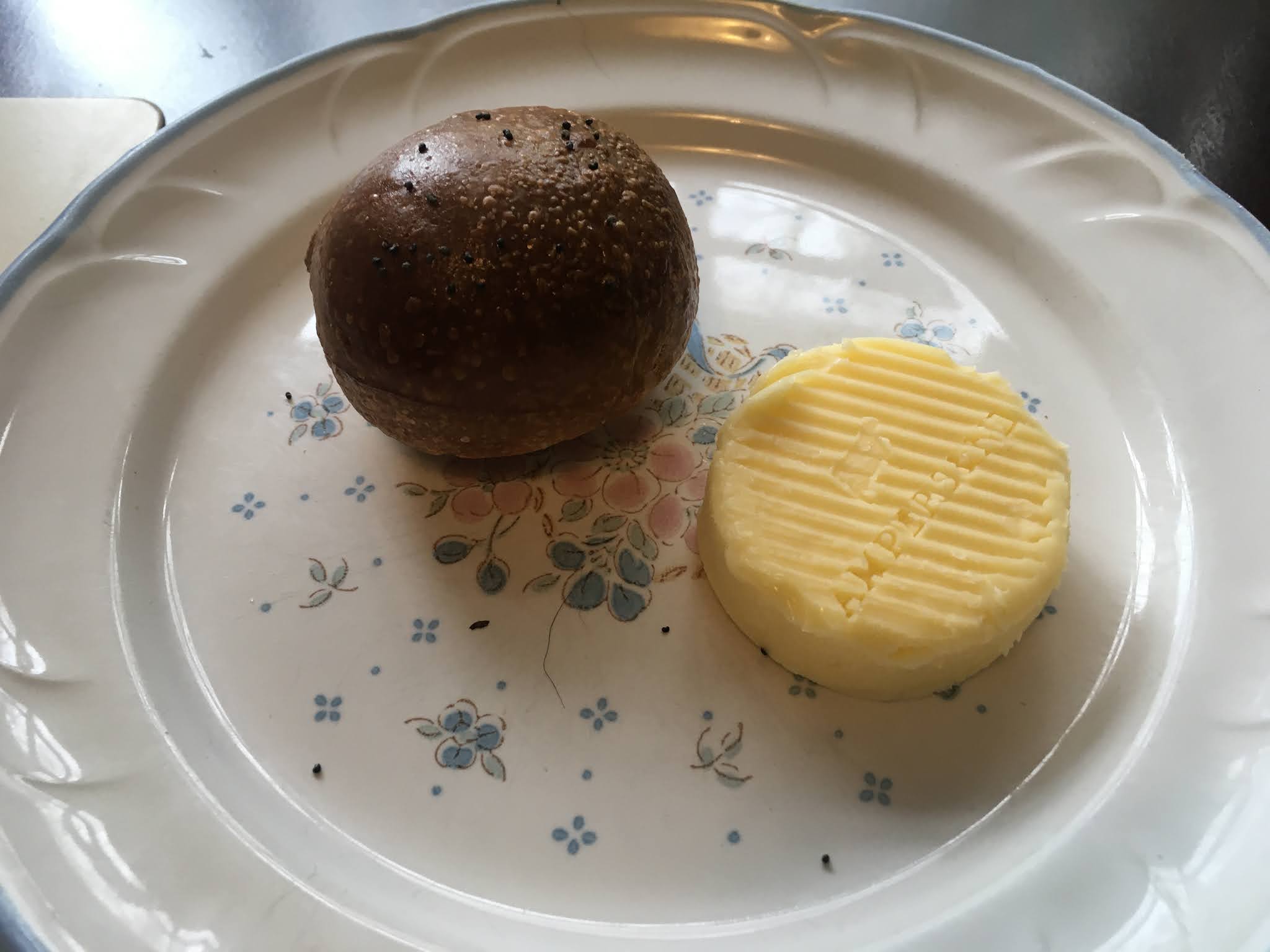
 The packaging was excellent with each course contained in its respective box. And with the box emptied preparation was pleasingly easy and lacking in risk of emotional trauma. Soup, what a good choice for the first cause, the enthusiastic amateur, charged only with warming everything up and plating up, can hardly do much harm. So within a very short time I was sitting down to a deeply luxurious and delicious lobster and red pepper soup poured over some little slices of red pepper which in honesty really didn’t do much to enhance the soup, all finished off with pleasingly crunchy croutons and Parmesan shavings. A course as good as one might expect and generously portioned (even if my plating up was, er, a little rustic). And accompanied by a pleasing little milk bun with some very fine Jersey butter.


  And so to the main course or Box no. 2 as you might like to call it - Corn-fed chicken, potato terrine, leeks and a cep cream. Preparation minimal apart from a little warming up and plating out. The chicken was excellent and delicious and the cep cream full of flavour. The potato terrine and leeks were pleasing accompaniments. As can be seen my plating up was far from elegant, but it still tasted pretty good to me.


On to dessert - what could be more Valentines than a dear old trifle? But not just any trifle. An Antona trifle or perhaps a Tipping trifle or a Bennett trifle or at any rate a trifle devised from someone at Simpsons or the Cross at Kenilworth. Yorkshire rhubarb and ginger trifle with toasted almonds. Just take it out of the fridge for 20 minutes and away you go. No plating up this time unless you feel you really must. This was indeed a very fine, and again generously portioned, English trifle. It reminded me of just how enormously enjoyable old English dishes can be though they be mocked  by those who judge themselves to have sophisticated tastes. The amount of ginger was sensitively judged so that one was aware of the flavour but not blasted by it but it lived at the back of the tongue for a while after finishing the dish giving a happy persistence to the joy of the trifle. This was a luxurious trifle fitting for the day of celebration. The rhubarb was perhaps more precisely correctly crunchy than a flavour hit but it played its part well enough. I’d eat this every day if I could. Mmm, yes the ginger is still there, perfect. And there was a gorgeous little treat at the end which I consumed gluttinously before I could photograph it - a happy little petit four made of fine white chocolate, shaped as, what else?, a heart and filled with gorgeous, mango-flavoured splendidly, gooey pleasure. Thank you Mr Antona.


 Despite the pleasure of these At Home meals it will be lovely to sit relaxed in a restaurant again, pampered and not even the slightest amount of washing up waiting to be done. I expect that we all hope that the new normal will give way to the old normal but for the moment we have the new normal to salvage our gastronomic spirits.

Saturday, 30 January 2021

129. What Is Lunch?


Birmingham - The 1890s - no school lunches then.


So what is lunch? For most, I suppose, it is the meal between breakfast and dinner though you might slip in tea, or what now has to be afternoon tea, between lunch and dinner. Of course lunch in some parts of Britain and among some social groups may still be dinner, in which case dinner becomes tea but not afternoon tea. Then there’s supper which has all sorts of meanings depending still, I think, on social status.

  These are the dark, dull, damp, dreary days of mid-winter in the midst of a third nationwide ‘lockdown’ (a noun which nauseatingly often does not seem to require either a definite or an indefinite article  especially when employed by the increasingly tiresome producers and announcers of the BBC who strive to bowdlerise English at every opportunity available to them). Our restaurants have been banished to a shadow dimension but food still makes the news. And particularly lunch it seems.

  These dark days of this present Lockdown have been brightened up for me by picking up and diving into, a chapter at a time, a copy of Pen Vogler’s recently published Scoff, a master work of the history of food in Britain and its relationship to class. Perhaps it’s a little light, I’d like a great tome myself with the sketches extended into highly detailed facts, every page a Eureka moment; the author clearly has a compendium of knowledge she could impart in several volumes of a British food encyclopaedia, but this book, with its rather pretty dust jacket, does indeed deliver those instances of ah ah! regularly throughout its 470 pages to make me keep coming back for more. Here indeed is the history of the British restaurant which I should love to see expanded from a chapter to a book and there there is the tale of why the British eat in the way they do now and again here’s the story of the way certain foods found their way on to British plates and sometimes off again. Pretty good stuff. And written with a playful irony and sense of humour and generously restrained hint of contempt for the worst sort of food fashions such as the numerous food intolerances that have been experienced by astonishing numbers of the middle class in recent years.

  And then there’s the fascinating chapter on lunch. Or is it dinner. Well, once it was dinner and for some it was breakfast and it seems those who like to call it luncheon may be on a sticky wicket, better to call it nuncheon if you’re not going to call it lunch or dinner. And just what it should be made up of and how much should be eaten during it is a puzzle wrapped up in a riddle wrapped up in a conundrum in itself.


 It is coincidental to my reading of Vogler's book that lunch has been such a big national issue recently and has been intermittently for several months that I really must mention it to fit it into this intermittent history of Birmingham food. A great national outpouring of outrage was unleashed when the government announced that it would not provide free school lunches for children who were not at school on a half-term holiday. It was not felt right by those who like to be outraged and those who are frightened of what the outraged may say that parents should be responsible for providing food for their children if they were at home causing a general nuisance to their parents by being there. The government’s resolve to make people pay for one week at least for their children’s food soon collapsed in the face of the universal outrage and they agreed to either providing food vouchers to enable the families to pay for their food or alternatively provide packages of food so that the family could prepare their own children’s food whether or not food preparation was something that families ever got involved in doing normally. 

  Provision of food packages was a gross error on the government’s part since packages turned up which the Outraged claimed were inadequate to sustain a child for 10 days (they were intended to cover 5 lunches). One furious mother delved into her child’s food package, lay the contents on the floor and set about photographing the resulting still life and then published the results of her photographic efforts on one or a number of the social media. The photographic challenge was soon taken up by other members of the Outraged and for a few days social media was full of photographs of loaves and potatoes and tins of baked beans and government ministers in a panic rushed to denounce the inadequacy of the contents of the boxes.

  So just how miserly and Scroogeian were these lunch boxes (remember they were meant to provide lunch only for 5 days and guidelines stated that they should not include pre-prepared food or take up space in refrigerators and obviously everything in them should be considered to be ‘healthy - which are quite limiting criteria when someone is trying to work out what to put in them)?

  The photograph taken by the first outraged mother is shown below. There are 2 potatoes which could be prepared as jacket potatoes for 2 lunches when served with half of the baked beans each time. There is a loaf which would provide more than enough bread for the remaining three days of sandwiches - one day of cheese and tomato and cheese on the other days. Alternatively half the beans could have been used to provide a filling meal of beans on toast and some of the cheese diverted for melting on top of a jacket potato for variety. However the package seems to have nothing in it to spread on the bread to make it more appetising. There is a piece of fruit provided for each day and the carrots can be peeled and sliced to eat as crudités. There is also a reasonably sized bag of pasta which is probably enough for one meal or possibly two (is this package for a seven year old or a fourteen year old.) and so generally this package is not quite so inadequate as a source of a single child’s lunches for five days when the contents are analysed and thought given as to what to do with the contents. But I should think the potatoes might be a little larger, some spread for the bread should have be included, 2 pieces of fruit should have been supplied per day, another tomato would not have been over generous and some meat as an alternative to cheese should have been offered for variety (though the colourful cylindrical packets may indeed be pepperami). 

  So there we are, a child’s lunch. Ironically, here in Birmingham several quick-to-outrage Labour councillors took to social media to complain about the adequacy of food packages sent to local schools to hand out but it later emerged that most packages to schools were actually supplied by the Labour-run city council itself and complaints ceased almost immediately.


  One final thought, I wonder if one of our leading chefs in the city might have ideas for putting together a children’s package for the rest of the present Lockdown - there’s a challenge but perhaps a little risky with the Outraged waiting to pounce.


Tuesday, 26 January 2021

128. Kray Tredwell Is Only Michelin Winner In Birmingham


  In one and a quarter hours of excruciating French accents and mangled English words and more film of Paris and New York than of London, the 2021 Michelin stars winners were announced in an online broadcast on YouTube that left Davina McCall looking horribly socially isolated but generally it all seemed a big improvement compared with the last two online-broadcast Michelin reveals (I prefer to say “reveals” as the official title word, “revelation” makes me think too much of the apocalypse which our restaurant industry may well be facing) with all the toe-curling embarrassment they brought with them.


  As is so often the case Birmingham and the West Midlands were largely ignored by the Michelin inspectors, currently obsessed with restaurants in Ireland, chefs with French accents, expensive London-based sushi restaurants and seemingly rarely finding their way out of London and the Home Counties apart from boarding planes heading for Dublin. There was an interestingly large proportion of Irish sponsors of these awards which may tell us something.

  We all know the Michelin awards are a waste of time for our region of England but they are important because people like to say, for no obvious reason, that they’ve been to a starred restaurant and that helps to make a chef’s reputation and often ensures his restaurant’s viability. In this Blog additionally they do at least provide a record of those local successful and accomplished restaurants which came and went over the decades and for that reason they do have a historical importance which, despite my reluctance, I have to acknowledge. We all know that the film which wins the ‘Best Picture’ Oscar is not, almost certainly, the best film of the year and the same is true of the Michelin awards. Here in the Midlands we are pragmatic, recognise the silliness of the Michelin awards but go along with them. Let’s face it, we’re not treated with the contempt with which Michelin regards Manchester (England’s self proclaimed second city, ho! ho!) so things could be worse. And our brilliant local chefs are always pleased to be recognised by Michelin more than they are by any other Guide, being frequently moved to tears by the success. And why not?

  So no new stars in Birmingham or the West Midlands and no extra stars for our 5 starred Birmingham  restaurants or elsewhere in the region. Still at least no-one lost a star. In addition there were no new Bibs Gourmands but there were new Michelin Plates and a couple of other interesting awards.

  And a great and pleasing surprise at almost the beginning of the show was the announcement of the award of the title Young Chef of Great Britain and Ireland 2021 to Kray Tredwell (see Blog 83) now well-established in his Digbeth restaurant 670 Grams (lockdown allowing) named after the birth weight of his child born last year. Along with this outstanding award came a Michelin Plate placing his restaurant at this early stage among the top 16 in Birmingham.

  The other well-deserved Plate winner was Andrew Sheridan’s extraordinary 8 in the International Convention Centre which joined its sister restaurant Craft among the Birmingham Plates first eleven. Aktar Islam’s Pulperia also found itself joining that particular rank while of course his Opheem held on to its one star (joining Purnell’s, Simpsons, Adam’s and Carter’s of Moseley in doing so). While still in Moseley we might also note that Chakana was awarded a Plate thereby joining Asha’s, Folium, Harborne Kitchen, Opus, The Oyster Club and The Wilderness in the prized group of eleven.

  Elsewhere in the West Midlands little else to report except that Daylesford Organic Farm restaurant, described in the programme as being in Stow-On-The-Wold but described on the restaurant’s website as being in Moreton-on-the-Marsh in Gloucestershire, was the only dining place in the region to be awarded one of the new Michelin Sustainability Green Stars. Good for them.


Summary of Birmingham restaurants’ Michelin status 2021:-

One star,  ⭐️ Simpsons, Purnell’s, Adam’s, Carter’s of Moseley, Opheem.

Michelin plate, 🍽  Asha’s, Chakana, Craft, 8, Folium, Harborne Kitchen, Opus, The Oyster Club, Pulperia, 670 Grams and The Wilderness.

  Finally, is it wrong of me to say that I think I’ve aged rather better than Gordon Ramsey has? ....


Monday, 25 January 2021

127. Lockdown Continues, Michelin Reveal Approaches.


 As the second wave starts to show signs of receding here in Birmingham and the West Midlands (but the low tide line is still a long distance away) the city and region, like the rest of England, remains locked in - and the doors are bolted (metaphorically not literally obviously) - restaurants remain firmly shut down and their owners and chefs continue to do their best to tread water till the tide is out again. 

  By far the most favoured way of keeping going is the home food parcel. At the weekend I had my third package from Purnell’s which to be fair was rather more Purnell’s Bistro than the mother ship itself. Hence the enjoyable bread course - can you call it a course?, it is after all a distinct entity in itself - was a pleasing chunk of focaccia with accompanying little tubs of a selection of olives, some pitted, some stoned and some neither, olive oil with balsamic, three slices of chorizo and a humous which was fine but rather too lemony for my taste and with too little garlic - all a matter of individual taste I suppose.

 On then to a generously sized fish cake which was robustly flavoured but again it seemed that the chef had been a little too enthusiastic with the lemon. The effort involved in frying it was minimal and the accompanying sauce was ready in less than a minute - wilted spinach in momentarily boiled crème fraiche  with a generous sprinkling of chives. Rather successful but the lemon, needed for the potently flavoured fish, again seemed a little overwhelming.

  What a remarkable main course - a beautifully sized piece of Chateaubriand, which by following the instructions carefully I turned into a delicious meal and very nicely accompanied by some very edible broccoli, a little square of Dauphinois (I should have liked to taste some garlic in it) and some perfectly cooked carrots enhanced by a tasty liquor and an exquisitely unctious beef sauce to pour over. A memorable Sunday lunch in which I had played my part.

  But there was a little more to go. I like light puddings. I could probably live on a diet of pannacotta. So the dessert pleased me very much. It had a nice little wobble and was nicely dressed by some very tasty toasted seeds, blueberries and lemon gel (more lemon but this time a perfect addition to the dish). A very happy dessert.

  The whole was rounded off by a “gift from the kitchen” - 2 little cubes of raspberry fudge which could not be bettered as gifts even if they had been gold, frankincense and myrrh. The meal was wonderfully good value. I was purring contentedly throughout. So what else could you ask for? Well I do miss the edible charcoal and black potatoes, the traditional appetisers at Purnell’s, but I’m prepared to wait that little bit longer for the present closure of restaurants to come to an end to enjoy those pleasures again if I must. But it’s hard.


Tonight’s the night when a thousand British chefs’ hearts pump that little bit faster - the 2021 Michelin reveal which will be relayed to an attentive audience at 6PM. How will Birmingham and the West Midlands fare? Not long to go to find out ... but I wonder, 2 stars for Opheem?