Saturday, 1 August 2020

108. Summer At Purnell’s.


  At the risk of being pretentious - the reader may judge - fine dining is an art. Of course if it succeeds as a visual art then that’s really rather pleasing in itself. It makes the diner pleased, even excited that, he/she is about to eat the enticing gem that has been placed before him/her. 
  But what really matters is the sense of taste and perhaps touch - the perception of texture - that’s the real art. If there’s no art in it then the resultant food may still be enjoyable, even very enjoyable, but it’s not fine dining. Fine dining is not a smartly plated dish of food sold at a remarkably high price. Some chefs and restaurant owners think it is. Their businesses usually fail within two years of first opening.
  Purnell’s has remained in continuous business for over 13 years. In that restaurant is art and certainly not just the visual. Four months of lockdown has not drained away any of that art from the chef and his team. If anything, my first post-lockdown lunch there was as good as any I’ve had (and I’ve had a few there now I think about it) and - I hesitate because I often say it after I have eaten at Purnell’s - but this might have been the best lunch I’ve had since my first ever visit there in 2009. Classic mixed with innovative. There are restaurants which serve fine classic cuisine and those which serve innovative cuisine, or what the chef feels to be innovative, and there are some which even have wit reflected in their dishes but there are few that combine all these elements in such perfect symmetry as Purnell manages to do time after time after time. And in that is art. High art. ‘Modern British’ is too trite.

  To the food, just pausing to mention that the table spacing is reassuring and generous and the nearest diners are almost distant objects. I had my own little corner and felt thoroughly at home and a glass of Hendricks and tonic with a new garnish using sweet little chunks of cucumber melon rather than cucumber itself had me happily embedded in the relaxed but careful and respectful atmosphere of Purnell’s. The staff, welcoming familiar faces in the main, enhanced the feeling of reassurance that dining here was about as safe as an old bloke out on the town could hope for.
  Life continued as it had ended 5 months before with the very great pleasure of Purnell’s joyous edible charcoal and his always startling and shamefully pleasurable faux black canary potatoes, a subtle flavour of lemon blended into them, with the most remarkably deliciously flavoured chorizo mayonnaise which always has me furtively scraping my finger in the little bowl to ensure none of it is wasted. There was only one sad omission - Purnell’s chip constructed from chickpeas rather than potato and one of the great inventions of the 21st century which proves that this new millenium has not been a total waste of time so far after all. 
  Afterwards there came the best restaurant bread in the city, still warm from the oven, Purnell’s very particular pain de campagne, lighter than a feather, tasty and with a splendid crusty edge. I wish he’d market this delicious bread for home consumption as I would never buy any other sort ever again. Somehow it seemed that balance had been restored to the universe.


  The starters. Not new but really another one of Purnell’s classics to assuage the angry vegetarian breast. While his Beetroot mousse remains, the beetroot craze of a couple of years ago will have been all worthwhile. His mousse, shamelessly creamy and tingling with horseradish and wasabi, lies as pretty as a picture (I turned it into one - see below) all the colours of beetroot nestled around it.


  And mackerel follows made more edible than it has ever been before - for my gastric juices - its  brisk flavour rendered perfectly subtle by honeydew melon, cucumber and dear old Granny Smith apple gel. Honeydew melon - I shall never again want mackerel without it, the combined flavour is celestial. Art - innovation. Worth making a ‘special journey for’.


  Plaice (Breaded and pan-fried with (excessively - sorry Boris) buttered crushed new potatoes and sweet petit pois has been one of my mainstays during the days of house arrest and I can’t get enough of it though I remember a horrific experience a few years ago at, of all places, Everett-Matthias’ two-starred Le Champignon Sauvage in Cheltenham where three exquisite little pieces of plaice were murdered by drowning in a sea of unpleasantly bitter beurre noisette served with what seemed like upwards of a thousand grim broad beans which was more like a wet August than a memorable summer (well it was memorable summer for all the wrong reasons). I could not have been more delighted therefore to find that the Fish du jour (Glynn at his most waggish) was indeed a supremely perfectly pan-fried piece of plaice (no limp water bath-cooked fate for this little pleasure) with a miraculously enjoyable accompaniment of a mijote of supremely correctly textured and flavoured St Austell mussels and Scottish girolles with a real final triumph in the form of samphire which didn’t advertise itself, sure in the knowledge that it was the little element that said that a genius was at work. Worth making ‘a special journey for’. 
  I almost forgot the parsley sauce. Parsley sauce and I are not the best of friends but that which accompanied this meal will be a friend for life if I bump into it again, just the right degree of parsleyness. I got to pour my own and think I made a rather chefy job of the pouring even if I say so myself (see photograph below).


  Main course. Pork. Fillet not belly - a victory for Chef already. No mention of the pork having been part of those dear little curly-haired individuals which Aktar Islam regaled me with two evenings before at Opheem so no need to be haunted by their appealing little faces which are more attractive than most peoples’ babies. I’ve long felt that the fat-counterbalancing acidic element of a pork dish can only really be apple. Chefs muck around trying out sharper-flavoured berries and the like, and of course pineapple has its place, but there’s no truly successful substitute for apple. Until now. The finely barbecued fillet was served with an apt celeriac purée and instead of apple a blatjang chutney, apple among its ingredients, which was a masterfully well thought out alternative to bring something new to this pork dish. And the cherry on the cake? Just like the modest samphire in the plaice dish, a smart little turnip was lying there waiting to impart its own completely appropriate taste, and texture, to the dish. Art again, you see. It’s the little details, the clever insights, that others don’t think of.


  As reported in Blog 79, Jarek Samborski took over as Manager from Sonal Clare in January 2020 with only a few weeks to run before the national shut-down. Now back in action, he seems to have hit the road running and has his team deftly organised and welcoming and seeming to cope well with the ‘new normal’ (ghastly term). And his wine advice is thrilling. He suggested a lovely buttery Uruguayan Pinot Gris which served the 2 fish dishes well and asked me to try out a very tasty Portuguese red which smacked the front of my tongue with a resounding flavour and lived well with the pork fillet course. And the suggestion for the ‘dessert wine’ was flabbergasting in its exciting deliciousness, “It’s controversial,” he said “but might I suggest a plum sake we’ve introduced”. Yes you may. Mmmm. So sweet, but not excessively so; Jarek said that there would be a hint of bitterness which actually I didn’t really get but to be fair I didn’t really want to. So that’s my new dessert wine and birthday and Christmas presents for those deserving of it. Thank you very much Mr Samborski.


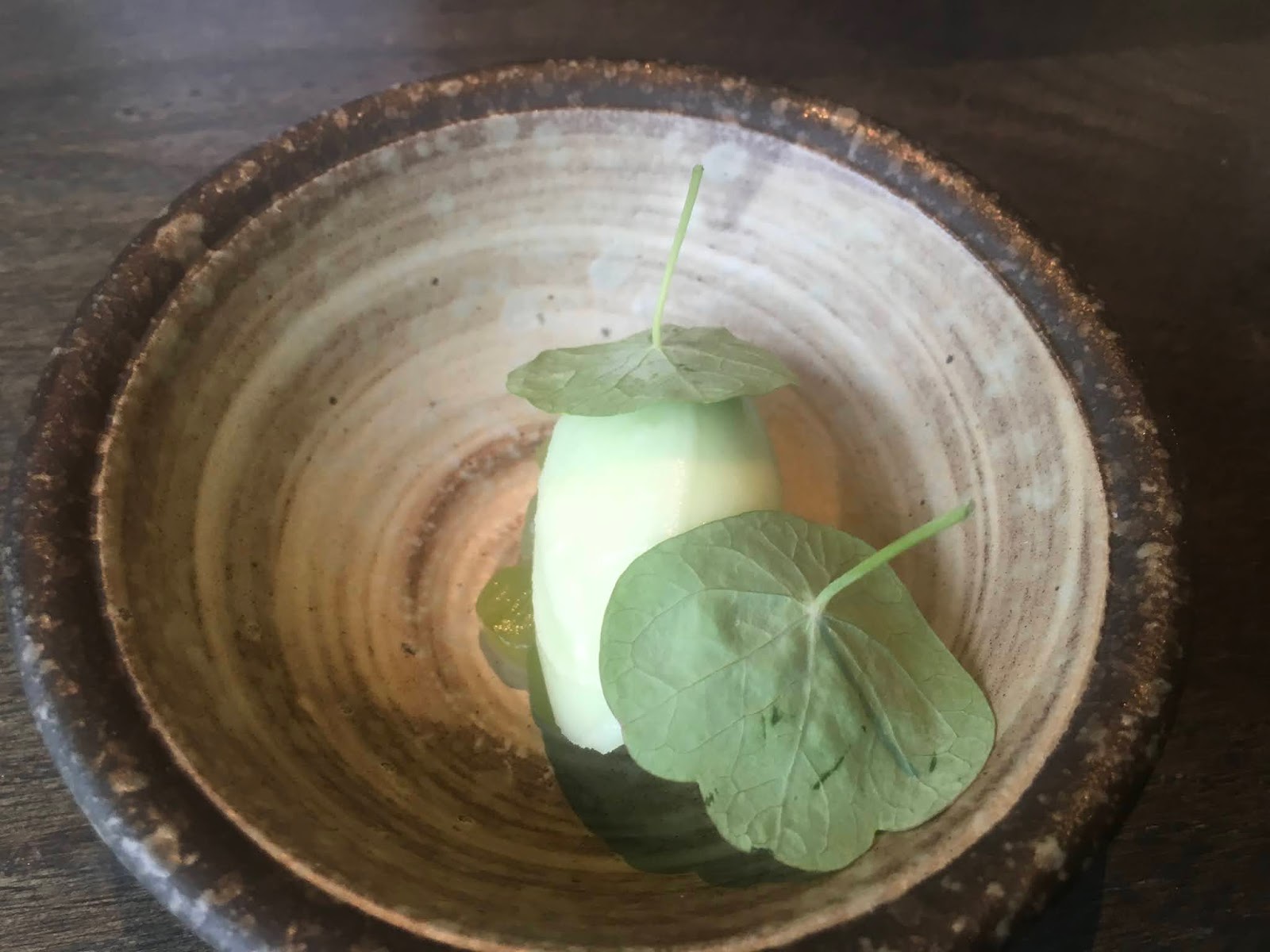
  The plum sake accompanied a truly delightful dessert - Purnell’s Eton Mess (which to be honest, it really isn’t - it’s neat and pretty and alluring not bits of meringue broken up and mixed with cream and fruit and stuff) - just look at the photo and you’ll see what I mean. It came along in its own social bubble (actually it looks a bit like a social bubble) with a dish of gorgeous brown butter crumble with blueberries and raspberry ice cream which complemented the dish’s soft, perfectly mildly chewy meringue. Is 10/10/10 (burnt English egg surprise) much greater than this very special summer dessert? I asked myself.


  This was one of the best summer menus I’ve ever had and it steered away from the summer menu clichés of peas and peashoots and strawberries and the always overrated broad bean with everything (not that I’m averse to peas and peashoots though I recall a couple of meals in the past where chefs thought that raw peas were a good idea with a charming lack of awareness of just how indigestible raw peas are for old blokes). Highly recommended and memorable and as always at Purnell’s a happy and comfortable experience as well as an opportunity to eat remarkable food at a price of unarguable good value.
  I ensured that I didn’t miss out on my coffee with the two accompanying petits fours, the chocolate on a stick and the ultimate, and what I believe was the original, scintillating mouthful that is Purnell’s blackcurrant jelly which should always be the last thing to be enmouthed at a Purnell’s meal.


  Oh! I forgot. The new final course:-


  Watch out, The Old Bloke is back in town. Buying works of (culinary) art by our city’s greatest artists. Art to make a special journey for.



Thursday, 30 July 2020

107. Last Out, First In.


  As March drew to a close, the last restaurant I visited before the balloon went up and the lights went down was the immaculate Opheem (Blog 88). It seemed perfectly right therefore that the first place at which I should dine out as I ventured out into this unnerving new Birmingham was again Opheem - I liked the symmetry of it but mainly I was just desperate to get back there and relive the happy delights of last March.
  Thus venturing for the first time on to a cross-city train in late afternoon, the carriage being largely devoid of human life though two or three of them could not find it in themselves to wear a facemask - well only one actually was unmasked while two others seemed to think the right way to wear a mask was on the chin leaving the mouth and nose exposed to inhale and exhale any viruses in the carriage air, I headed for New Street Station and a return to contact with other humans who like food.


  The welcome back to Opheem was delightful and I was rapidly made comfortable in the bar area and was soon joyously relaxed as I sipped at a sublime Monkey 47. My first two snacks were served to me as I lounged in my comfortable chair. Pleasure had returned to my life. The first snack was an oyster shell housing an oyster emulsion with blazingly spicy jalapeño juice and pickled onion and next to it a little cone with a pea ice cream sitting on soothing coconut with a pleasurable mild spiciness elbowing its way in. I could have sat there all night nibbling away at a few more of these pleasures. But I was escorted to the bar to be introduced to my third snack - a flaxseed cracker shard made memorable with little pipings of mustard and vinegar gels dotting its surface. Some of the ingredients of the upcoming menu were explained to me and I was introduced to the pink fir sweet potato from no further away than Warwickshire - to whom I was a new acquaintance (the potato not Warwickshire). The potato is remarkably sweet apparently and waxy (I thought that that might be good for chips but it has so much sugar that it rapidly caramelises and chips burn still only partially cooked). Then off to the dining room.


  Starter - Bhutta, from Madras - back to the word, “Sublime”. A most perfectly enjoyable grilled corn with a wondrously spiced butter. Unmissable.


  Tisria, from West Bengal - fabulously delicious marinated Orkney scallop with slices of radish and a Bengali lime and coriander dressing. 


Tisria came with its own swirling mists:-


  Now here the meal took a turn wisely aimed at ensuring the diner would not have eaten the 10 course tasting meal without feeling as full as any man can hope to feel. And here the pink fir potatoes from Warwickshire came into their own.

Aloo Tuk, from Sind. Pickled and barbecued pink fir potatoes with croutons covered with a potato foam and with a tamarind purée. The flavour and texture were delicious and by the end of the course I was beginning to feel that I was comfortably filling up.


Pao, a new bread for the restaurant- a generously portioned milk loaf with accompanying onion and lamb butter. Wonderful but a potato course followed by an impressive piece of bread is rapidly filling and a little difficult for an old bloke like me to cope with. I wouldn’t want to have missed it but the strain was beginning to show.


A refreshing sorbet to give time for the scenery to change to prepare the stage for the main acts.


 Dopiaza, from Delhi. A boldly cooked and delicious monkfish served with Roscoff onion broth and a spiced onion compote. Perhaps the caramelised onion’s charred flavour was a little heavy for me but this was one of the peaks of the meal for me. But there again this was a meal with as many peaks as the Himalayas.


  And finally to meat. By then feeling rather full. Dukka Maas from Mangalore. What a joy to be served with not just the omnipresent pork belly but also some fine loin. Beautifully cooked except that the loin was rather salty. I tried not to imagine the dear little faces of the curly haired Mangalitza pigs which provided the base for this dish as I cut lightly into the meat. The Roscoff onion contained tasty keema fragments and the hispi cabbage was there doing what it usually does. Sadly after the potato and bread courses I could make little headway with the lovely Basmati rice served with is dish.


A pre-dessert and then on to Pista which is a fine dining equivalent of a Jaffa cake made from Manjari chocolate and served with a neat little swirl of pistachio ice cream.


  I was looking forward to some Lassi and greatly amused by what turned up to represent it. With shards of meringue riding atop the dish, strawberry ice cream and strawberry jam were nestled in the bottom of the bowl alongside half a small milk bottle-sized strawberry lassi and separately a bowl of what looked like a single strawberry on a heap of something I was told was not for eating. The faux-strawberry was a cheering liquid-filled strawberry-flavoured chocolate and quite an appropriate ending to this phase of the meal.


  Back to the bar - all part of the deal - for a delicious Darjeeling chai accompanied by a Darjeeling tea-flavoured pannacotta and last but not least 2 petits fours - a rapturous Turkish delight and the final refreshment of a raspberry jelly.
  So it was good night for now to Opheem where the food may really be the most exciting around and the staff really know how to look after their customers. I felt very comfortable there and the very well-spaced seating and tables made me feel very safe. So my dining adventures have started again and away we go with a turbo lift-off at Opheem. My stomach told me I’d eaten rather more than I probably should have done but I would have been sorry to have missed any of the splendid dishes.


Saturday, 18 July 2020

105. Michelin Guide-Featured Restaurants Of The 1970s.

 As the weeks of inactivity pass by and having now spent months in or in the vicinity of my home at the southwest edge of the city and never once venturing even to the large shopping centre a couple of miles away and certainly not risking life by travelling on public transport, the old proverb that the Devil makes work for idle hands comes to mind. And old Beelzebub has got the upper hand and tempted me into completing my collection of modern British Michelin Guides. Well, as demonic temptations go it’s not the worse sin the old Devil could have come up with and it is one which is pleasingly cheap with some very nice copies of the various editions being on sale on internet sites for as little as just over £2 post free.  It’s also a victimless crime apart from my local postman who now greets me with increasing bemusement and the words, “Some more books for you”.
  As we know the first edition of the guide to be published after publication had ceased in 1931 was the 1974 edition. It featured a paltry seven Birmingham restaurants, two of which served Italian style food and one was located in Sutton Coldfield and one in West Bromwich. The Guide found Birmingham city centre to be a gastronomic desert saved only by Italian food which was served by La Capanna and also Lorenzo which was something of a venue for any celebrity who found themselves stranded in Birmingham and in need of being seen by celebrity spotters and decently fed at the same time.
  In the whole of the 1970s (74-80) Birmingham was represented in the Guide by only 14 restaurants. Italian was very much the theme of the half-decade. British food, if it had defined itself by then, was treated with the contempt it was perceived to deserve as restaurants serving French, South Asian and even Austrian cuisine were prominent in the publication.
  In fact Indian food was represented in the 70s solely by the splendid Rajdoot, then located in Albert Streetit served not only delicious dishes but there was a lot of theatre about the place and it was not only a place to eat what was for many still exotic food but also a destination in its own right.
  Below is the list of featured restaurants and the editions of the Guide in which they appeared:-

Burlington 1974, 1975, 1976, 1977, 1978, 1979.
Lorenzo (Italian), 1974, 1975, 1976, 1977, 1978, 1979, 1980.
La Capanna (Italian), 1974, 1975, 1976, 1977, 1978, 1979, 1980.
Lambert Court, 1974.
Danish Food Centre, 1974, 1975, 1976, 1977, 1978.
Royal (Sutton Coldfield), 1974.
Manor House (West Bromwich, Hall Green Road), 1974, 1975, 1976, 1977, 1978, 1979.
Diment’s (Sutton Coldfield), 1975, 1976.
La Gondola (Sutton Coldfield, Italian), 1975, 1976, 1977, 1978, 1979, 1980.
Rajdoot (Indian), 1976, 1977, 1978, 1979, 1980.
Pinocchio ((Italian), 1978, 1979, 1980.
Giovanni’s (Kings Heath, Italian), 1978, 1979, 1980.
La Copper Kettle (Bearwood, Provençal), 1978, 1979, 1980.
La Caverna (Sheldon, Italian), 1979, 1980.

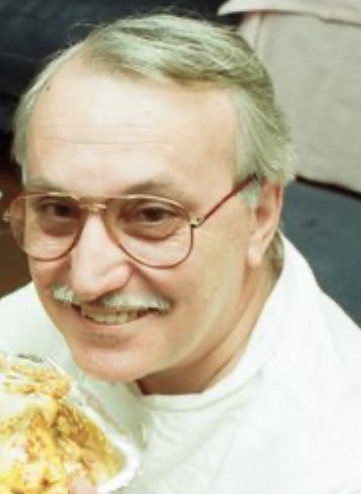
  It’s worth mentioning Lorenzo, or in some editions Lorenzo’s, which was opened by Lorenzo Ferrari in the early 1970s in a building in Park Street which dated back to 1863 and had been first a concert hall and then, from 1912, a cinema. As written above, throughout its life it had a reputation as a celebrity haunt and only closed in 1993 when Ferrari retired to Italy. The restaurant retained its Michelin listing right up until the year Ferrari closed it.

Lorenzo’s, Park Street, Digbeth, closed eventually in 1993.


Lorenzo Ferrari

Chef at Lorenzo’s, Tony Contaldo


Tuesday, 14 July 2020

104. It’s 1973 And There’s Something Nasty In The Fridge

Saturn Devouring His Son by Francisco José de Goya, 1820-23.

  When the 1974 Michelin Great Britain and Ireland Guide was published, the first edition since 1931, I had little interest - probably none at all - in good quality food. I was a student and most evenings on returning to my flat which I shared with three other non-foodies I cooked myself an omelette and ate it with some warmed up baked beans (Heinz so I suppose I must always have had some appreciation of fine food at whatever price) and fruity brown sauce. I can’t remember seasoning my omelette but I suppose the brown sauce - also Heinz I think and not obtainable for a long time since though Branston Fruity Sauce is a worthy substitute - must have been all that was needed as a condiment for my own particular signature dish.
  My flat mates were very divided on food and the big kitchen in the flat was necessary to encompass the multiple meal preparations taking place simultaneously - one flatmate was addicted on an almost daily basis to a Birds Eye or perhaps Findus boil-in-the-bag fish in white sauce, the second co-habitant existed largely on a menu of unaccompanied bars of chocolate, glssses of milk and some cheap cereal pre-bed and the third - a large young man from Bradford distinguished by a vast mop of thick, wiry and unruly hair which seemed uncombable - saw everyday, unlike we others, as a potential culinary adventure which usually involved some unspeakably unpleasant-looking and vaguely malodorous piece of offal which culminated one afternoon in we other three returning home to open the door of the usually near-to-empty fridge to be greeted by the menacing and somewhat stomach-turning sight of an enormous uncooked bull’s testicle laid out on a large plate awaiting the attentions of our Masterchef with the uncontrollable hair. There was a general gathering in the kitchen to watch the ceremony of the cooking of the testicle and to listen unbelievingly how the chef considered it to be an excellent dish (though I have shut out from my memory quite how he prepared the dish). So excellent was it that rather surprisingly no other gigantic bull’s testicle ever again was known to materialise in our communal refrigerator though we three unwilling observers of Unruly Hair Cuisine have long suffered a form of post-traumatic stress since the revelation of what was lying on a plate in the fridge that day.

Something nasty in the fridge

  Someone rather foolishly had the idea that we should have a communal meal and each of us in turn should cook for the others. My cuisine was limited to omelette and beans and my flat mates made it clear that I would have to try harder when it was my turn to cook though I would have thought that the effort involved in preparing a decent omelette was no lesser than that involved in unwrapping a bar of chocolate or dropping a plastic bag of fish in sauce in a pan of boiling water. To make the point one of my flat mates handed me his cookbook which his mother had forced on him when he first came to university and which had not been opened up till then. It all looked far too wearisome to me and I didn't like the thought of either the cost of, or the handling of, raw meat which, though we as medical students were currently involved in dissecting human cadavers, lacked appeal to me.
  Fortunately, or perhaps unfortunately, I discovered a dish which was entirely made up of vegetables and had the intriguing name of Mock Goose and this clearly met my needs to enable me to present to my flat mates a dish which had required preparation and cooking without stretching a very limited budget and get involved with raw meat. It basically involved slicing up three or four types of root vegetables and apples and braising them in the oven for a period  of time. The result was not a happy one and played a large part in putting a stop to the fantasy of the desirability of communal eating in our four-man community. Though the recipe was about as straightforward as you might hope for it became obvious that I had neither sliced the vegetables finely enough nor did I leave them to braise for an adequate length of time and the result was a meal reminiscent of that cooked by one of Celebrity Masterchef’s loopier first round contestants - inedible, tragically undercooked, thickly sliced vegetables and nothing else.
  At least we were spared our wiry-haired flat mate’s Offal surprise as a result of my Nul points effort and so on balance I feel my flat mates had something to thank me for after all.
  But outside of our grubby little flat (actually it was really quite clean and surprisingly acceptable but you would be disappointed for that to be true of a student flat in the early 1970s, when everyone still looked very much like characters out of Withnail And I) the British food scene was coming alive and Michelin was thinking that the Ingleesh might possibly have one or two dining establishments around where a Frenchman might find a passable meal if he were unfortunate enough to find himself in this uncouth benighted country though they would have to be establishments run by and cooked in by Frenchmen or at least be places where some form of continental European cuisine was being served.
  And that brings me to the subject of this piece - was anywhere in Birmingham recommended by Michelin in Birmingham in the 1970s when the first editions of the Michelin GB Guide reappeared? The answer is revealed in Blog 105.


Footnote - For anyone wanting to experience for themselves the unimaginable hedonistic pleasure of Mock goose it’s worth noting that in some ways this is a hoary and venerable British dish originally recorded in 1742 in the cookbook The Art of Cookery Made Plain and Easy by Hannah Glasse. She described a dish in which pork knuckle was stuffed with sage and onion, salted and peppered and served with gravy and apple sauce though why this should be called Mock Goose or Poor Man’s Goose is not entirely clear to me (why not just called it pork with sage and onion stuffing and apple sauce?)
  Later, in 1897, the dish had devolved into sausage removed from its skin baked in layers with mashed potato and again seasoned with finely chopped onion and sage (actually that sounds quite good, I might make it sometime). No mention of apple here but I should think an apple sauce would be an excellent accompaniment.
  By the time of the Second World War, with meat heavily rationed and the population glad to eat almost anything, a version of the all-vegetable Mock Goose surfaces and that, I think, was the basis for the dish outlined in my flatmate’s student cookbook and with which I regaled my house companions with such great and appreciated success.

Tuesday, 30 June 2020

103. Planned Reopenings.


  Not all of Birmingham’s leading restaurants plan to reopen at the prescribed hour on the prescribed day when COVID-19 restrictions are relaxed by the government of Boris Johnson.

  Various notifications have come through:-

Purnells. 4 July 2020. The restaurant is planning 2 special dinners to celebrate reopening as well as the 13th anniversary of its first opening but at a time like this is the thirteenth anniversary really one to go to? I’d like to make a reservation but I am superstitious. We old blokes must be careful you know.


Folium. 5 August 2020.


The Wilderness. 7 September 2020.


Simpsons. No date of opening yet announced.


Adam’s. August, date unspecified.


Opheem - 2 July 2020

The 11 June 2020 edition of the Birmingham Post published a detailed article by Sanjeeta Bains on the plans various restaurants were making for their reopening including the news that Craft Dining Rooms had spent £3000 on a thermal imaging camera to help to detect any customers or staff with a raised body temperature. I’m not sure whether that was money well-spent as people with COVID-19 might not have raised temperatures and yet be just as infectious as if they did, so the camera might easily provide a false sense of security. But no-one can deny that the restaurant is doing its best to help diners feel comfortable when returning there.


Tuesday, 23 June 2020

102. Restaurants To Reopen In July.


Furloughed staff of Craft Dining Rooms celebrate the return to work in the open-air dining area.
  Boris Johnson, the British prime minister, confirmed in The House Of Commons on 23 June 2020 that restaurants would be allowed to reopen on 4 July after 3 months of ‘Lock down’ necessitated by the now diminishing COVID-19 pandemic. He also confirmed that ‘social distancing’ should be reduced from 2 metres to 1 metre ‘plus’ (wearing a face mask and other measures) though it is clearly quite impossible for diners to wear a mask while eating unless they find a new orifice in which to insert the food.
  Many Birmingham restaurants have opened their reservations lists in the past few days in anticipation of the prime minister’s announcement and have been detailing the measures they intend to take to enable their diners to feel safe. Of course feeling safe is not the same thing as being safe. I however  will take the plunge at the end of July and will hopefully be heading for Opheem, Craft Dining Rooms and The Wilderness in the ensuing weeks. It seems fitting to return first to Opheem as that was the last restaurant at which I dined just a few days before Lock-down began. Like Pavlov’s anticipatory dog, my salivary glands are working overtime as I write this
  It seems that a new era in Birmingham and West Midlands dining is about to begin.

Excellent social distancing but where are the face masks?
Less than 1 metre apart but it’s alright - they’re all from the same household.


Friday, 19 June 2020

101. More Trees Than The Bois De Boulougne.

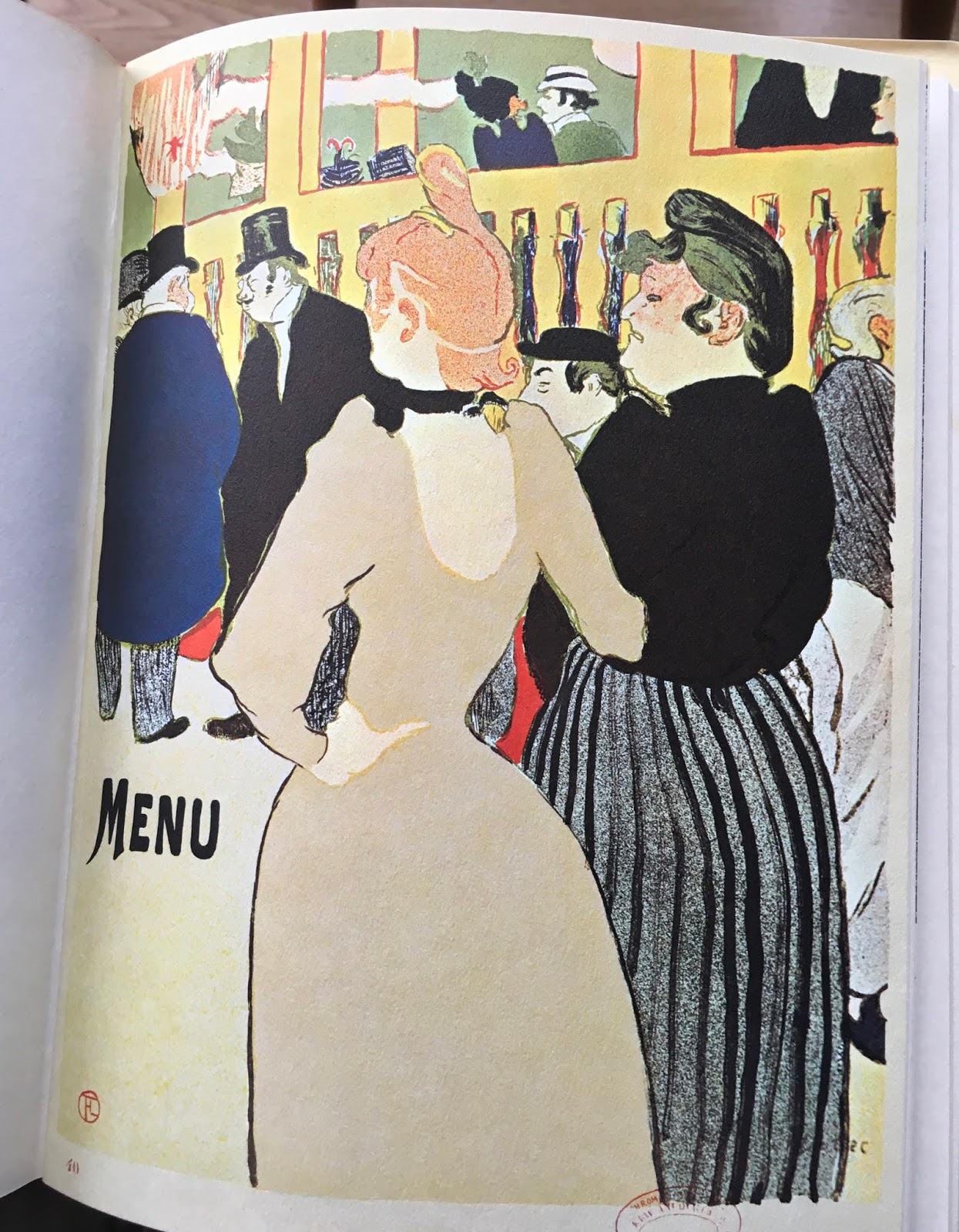
  Following on from Blog 100, I have now managed to obtain a fine copy of Henry de Toulouse-Lautrec’s and Maurice Joyant’s  ‘The Art of Cuisine’ in its English translation (by Marjory Weiner) which was published in its first edition in 1966 by Michael Joseph. It’s a fabulous book and full of curiosities. Not of all of it could be viewed as being applicable to Birmingham in the year 2020 however.
  Take this section for instance - “HOW TO MAKE CHICKEN TENDER Poulets a devenir tendres - In order to make chickens immediately edible, take them out of the hen-run, pursue them into open country, and when you have made them run, kill them with a gun loaded with very small shot. The meat of the chicken, gripped with fright, will become tender. This method used in the country of the Fangs (Gabon) seems infallible even for the oldest and toughest hens”. If you think de Toulouse-Lautrec has substance in his recommendations for chicken tenderising and you intend to follow his advice it would be wise to keep quiet about it. It seems hard to imagine one of Birmingham’s famous chefs pursuing a knackered old chicken down Cornwall Street or Waterloo Street or through the Jewellery Quarter to render its flesh more tender.
  Some illustrations from the book:-

Frontispiece showing a Painting of T-L (at his oven) at Misia and
 Thadée Natanson’s at
Villeneuve-sur-Yonne
by Eduard Vuillard, 1898


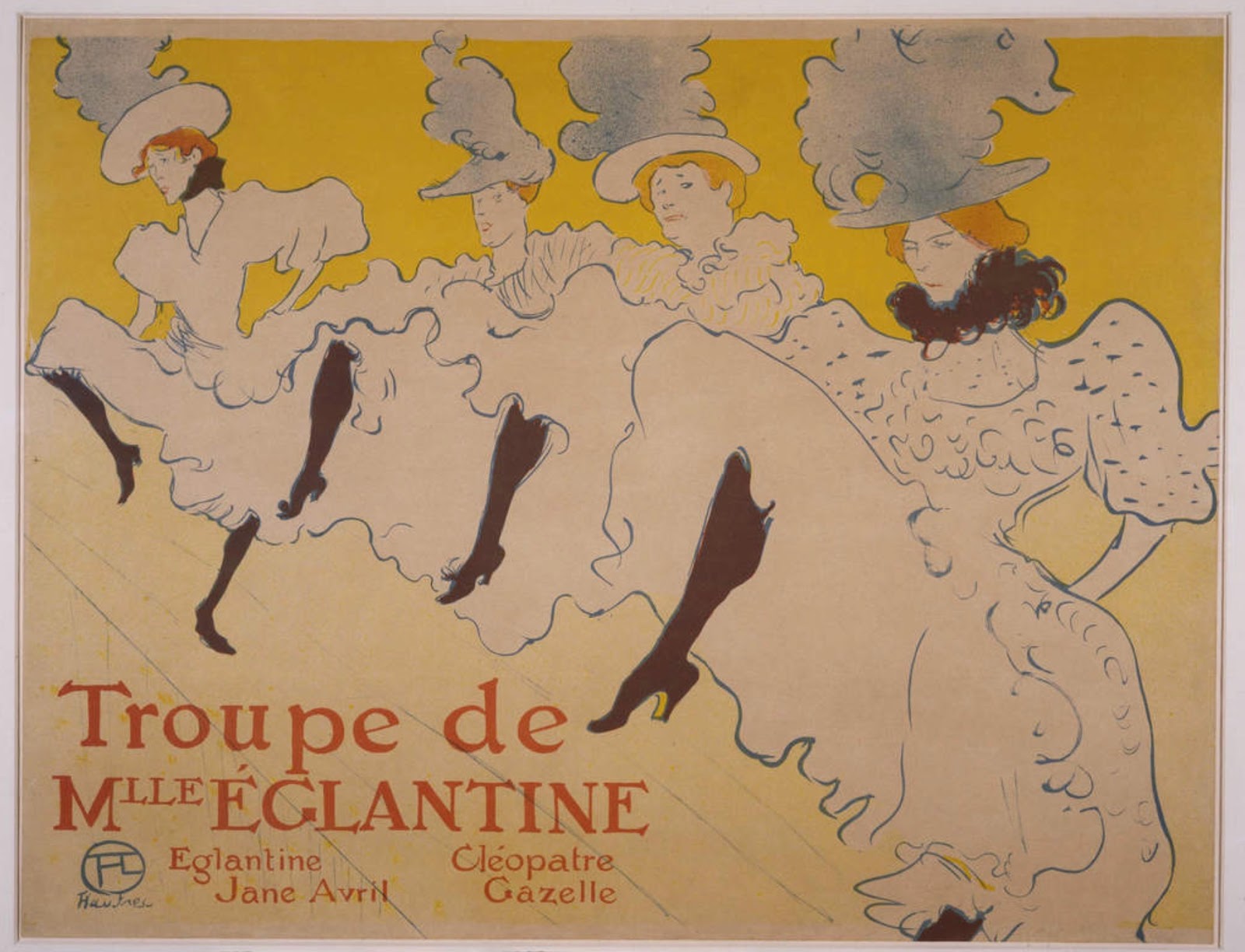
  It occurred to me that it might be nice to track down any T-L art in Birmingham and search out anything food-related and even if it weren’t at least come face-to-face with some of his joyous works in the flesh. Of course, it still being the time of Lockdown that was not something that was immediately doable (just like sitting down in Purnell’s to his witty dishes is still not doable). A trail of the internet was not very promising and I have only come up with three pieces of his work in Birmingham’s galleries. In Birmingham Art gallery and Museum there seems to be only one piece - Troupe Della Mlle Églantine which has nothing to do with food. I can’t quite see these young ladies showing a leg while diners sit eating their amuses bouches in the formality of Adam’s. I would have thought Adam’s was more pre-Raphaelite than gay Paree.


  The internet suggests that there are 2 T-L works at the fabulous Barber Institute in Edgbaston. Alas again not food-related in subject. Firstly there is A Woman seated in a garden (c.1890)which might do very well for Simpsons.


And secondly there is Le Divan Japonais (1892) which might sit well in one of Birmingham’s cocktail bars and Gingers Bar feels rather suitable considering the appearance of the lady in the picture.


  Finally one must think that The Wilderness is definitely more Goya than Lautrec.

  I think that vibrant numbered and signed printed menus by suitable local artists, their style to match the restaurant, served with meals, perhaps on special evenings if the expense is rather great, could be a great draw to bringing the fearful back to our restaurants once they are allowed to reopen. It could open up a new collectors’ market.


  It’s worth recalling that in the mid-20teens, Birmingham did indeed have a restaurant which attempted, to a limited extent, to recall the Parisian restaurants of the Belle Époque. The large restaurant at the far end of Corporation Street where one turns the corner into Steelhouse Lane was named Annexe and looked rather smaller as one walked past it. The location was awful with very little passing trade except, I suppose, from persons having business with the nearby Victoria Law Courts. The restaurant was also graced by employing one or two staff who thought that they were Parisian waiters and treated their customers with the appropriate degree of disdain and condescension. The food was expensive with nothing innovative about it which at least would have made the high prices demanded for shockingly small helpings of food more defensible. The interior was rather dark and gloomy and had nothing to do with the bright scenes depicted in the work of Toulouse-Lautrec. Special event evenings were held including the showing of classic French movies - that much at least was innovative and imaginative - and these, for a while at least, made the restaurant wildly popular  avec Les Tripadviseurs of Birmingham who rated it the number 1 restaurant in Birmingham until they probably became fed up of leaving the restaurant hungry despite having paid a large bill and having the experience of being treated with contempt by the waiters. Perhaps they thought that they were being given the genuine French expérience. 
  Annexe closed in July 2017 with the management announcing that their landlords, the owners of Central Hall, wanted to sell the entire building containing the restaurant. Before closing the restaurant did host a Bastille Day celebration.
  Apart from my first visit, when I noticed the restaurant as I was passing (probably the only passing trade it ever got), I sat at a table on the pavement outside downing a small quantity of some extravagantly priced but admittedly tasty onion soup with an equally small amount of bread (a table at nether-Corporation Street alas does not mimic Montmartre sufficiently) I visited Annex only one more time for a mid-week dinner - it seemed to be struggling to attract customers but that had had no effect on the chef’s inability to provide an adequate plate of food or the front of house staff to behave vaguely politely. It seemed likely that it was a restaurant with a limited life expectancy. Pity it could have been a great hit but it’s poor location and tight-fisted and ungracious approach to its customers ensured its doom.