Showing posts with label Thom Bateman. Show all posts

Monday, 9 June 2025

487. 2025 Great British Menu Dishes At Hampton Manor.


  I was pleased to grab a suddenly available, last minute ticket for an exciting event hosted by David Taylor at Hampton Manor which brought together the four chefs of the Central and East region in the 2025 Great British Menu (see Blogs 467 and 468) competition screened by BBC. We will recall that Taylor was the first chef to be eliminated on the first day of the competition when three chefs - Taylor, Thom Bateman and Harry Davenport from East Anglia - all tied with the same number of points and Taylor’s somewhat lacklustre but subtly sophisticated canapé which had proven to be the least liked by chef-judge Tommy Banks led to his early departure from the competition.

  We will also recall that East Midlander Sally Abé went on to win a place at the banquet itself and scored a perfect 40/40 points for her starter course, Nursed Back To Health, which celebrated Florence Nightingale who spent some of her childhood in Derbyshire and that she also tied in first place of the main course with another perfect 40 points with a venison dish, Eat the Rich, but lost out after much discussion to a chef from London.


  And so to the fine evening of 8 June 2025 when ordinary food lovers had the chance to not only see and have described some of the notable dishes which were served by the chefs in the heats of the Central and East region in the BBC programme but also also to smell them  and taste them. 

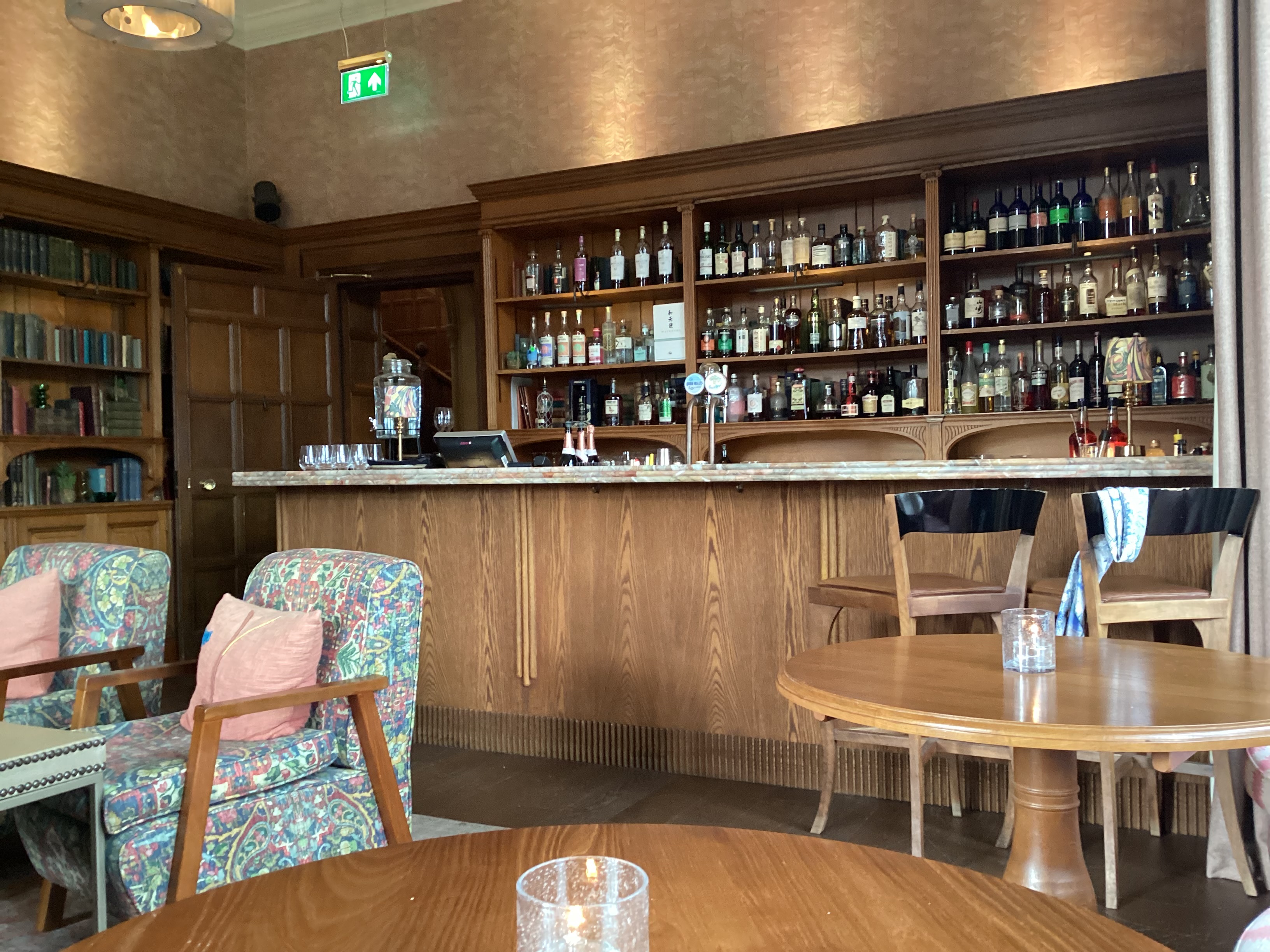
  I arrived rather early at Hampton Manor and started off the evening in the comfortable, homely hotel bar sipping a very pleasing Grapefruit Collins and then was shown my way to the outside area where a Nyetimber reception was being held and where the first of the canapés was served - an excellent, full flavoured salmon and cucumber crumpet topped by a generous helping of Exmoor caviar prepared by chef Harry Kirkpatrick. 


  Then into the dining room for the two remaining canapés - Sally Abé’s coronation crab crumpet where, sadly, I neither got the flavour of crab nor the true taste of coronation sauce and Thom Bateman’s very tasty Staffordshire cheese custard and salt baked beetroot tart with black garlic ketchup.

  Then the host for the evening, James Hill, Hampton Manor’s managing director, introduced the evening to the eighty or so guests (roughly the same number as those attending the BBC’s banquet) and then interviewed Sally Abé so that she could describe her dish to her diners who were full of enthusiastic anticipation. The first course was an obligatory vegetarian dish in the Great British Menu and at the banquet Abé scored a perfect 40 with it. And, served by the chefs who mingled with the diners, it was delicious. The dish, as reported above, was Nursed back to health - a lovely, clear onion and seaweed consommé with a small roast potato full of punchy Brixton Blue cheese and the hit of black truffle served with the most fabulous little brioche loaf ever presented in an English restaurant, gorgeously glutinous and sticky with its yeast extract glaze. This was a very memorable dish and it is not surprising that it went down so well with GBM judges. 


    Next came the fish course and Harry Kirkpatrick delivered a wonderful Cornish brill Wellington with a leek and brown shrimp mousse betwixt the fish and the excellent pastry. The fish was beautifully cooked inside its casing and had a full bodied and distinctive flavour which made it very moreish. The brill was served with a generous amount of sauce fleurette (Hollandaise enriched with cream, (crème fleurette)) which made the plate look rather rustic though it was so pleasing to have a generous helping of sauce rather than the little smears that usually appear on fine dining plates. I think that this was my favourite dish of this particular banquet. 


  In contrast, I am afraid to admit that I found Thom Bateman’s Origin of Species, which celebrates Shrewsbury’s Charles Darwin’s theory of evolution by linking the dish to the evolution of the domestic pig from the wild boar, somewhat problematical and unenjoyable. The dish presented slow cooked wild boar collar which, for me was too dry in texture, with barbecued Mangalitsa loin glazed in black garlic and honey; the latter had a fair degree of chew to it and felt claggy in the mouth. The pickled walnut ketchup had a zing to it but the potato terrine cooked with Mangalitsa pork fat was too salty though it was admirably crispy and crunchy and would have been delightful were there less sodium chloride discernible. There were sticks of apple which gave a little comfort though more might have helped the pig go down and more sauce may also have helped matters.


  Then to David Taylor’s contribution. There was what the irritating Scottish comedienne Susan Calman called “the prepooding pooding” in the single series in which she hosted the programme. In this case the ppp was titled A Light In Darkest England and paid tribute to those who had suffered serious physical consequences caused by their work in the match production industry in the Victorian era. It was pleasant enough and did the refreshing job that it was meant to do but it did not seem to have the pizzazz that might have been needed to have enthused the GBM judges - it was a redcurrant compôte with a crème fraiche sorbet with rhubarb root oil and chocolate matchsticks which would not have added much to the dessert apart from fitting in with the theme and being nice little pieces of inoffensive chocolate.


  The dessert proper was titled For Robert and clearly held a lot of meaning for David Taylor and it probably hurt him that by being eliminated in the first day of the GBM regional round he had not had an opportunity to present the dish to the viewing public. The dish celebrated the charity work of a boy with terminal cancer who had produced beaded bracelets to sell in support of another boy who was a friend of his and who also had the same diagnosis; hence the title.

  The dessert took the form of a trifle, and who would be unhappy about that?, the various layers of which were in the kind boy’s favourite colours. Thus there was a blackcurrant leaf sponge, exhilarating blackcurrant jelly, raspberry cream, apricot custard and a gorgeously tasty blueberry cream. The trifle was served with a barbecued pineapple fruit kebab but I can not comment on it as the waiters failed to serve it to our part of the table.


  Afterwards, the four chefs came and sat on the stage in front of the diners who were able to ask questions. Unfortunately I was unable to stay to the end of it all but I left having been very happy to experience some of the dishes from this year’s Great British Menu and interested to gain an impression of what the dishes tasted like rather than just seeing them on the television.


Saturday, 8 March 2025

467. Great British Menu Central Region Heats (2).


  Continued from Blog 466 …

  Thom Bateman chose to present a pork-based dish for his main course and titled it Origin of the Species which celebrated Charles Darwin and his theory of evolution and illustrated his theme by centring it on the evolution of the wild boar to the domestic pig. The dish was made up of braised and shredded wild boar shoulder and collar served on a pork fat boulangere with barbecued mangalitsa pork fillet glazed with black garlic and honey accompanied by barbecued Granny Smith apple and a pickled walnut ketchup, celeriac purée and pork sauce.


Wild boar collar and shoulder

Ingredients for Original of the Species - Mangalitsa to right of the picture.


When delivering his verdict on the dishes Tommy Banks noted that only once before had a pork dish won the right to be the Great British Menu banquet main course. Banks made very positive points about the dish and had no negative points to mention. He awarded it 9 points.

  For his predessert Bateman served what he described as a chive biscuit ice cream sandwich to honour the scientist Dorothy Hodgkin and her work on X rays. The predessert was made from homemade pine oil, sugar and citric acid in the form of a spruce sherbert, a cherry gel and the ice cream was replaced by a pistachio yoghurt. When judging it Banks felt that the bone shape made it look like a dog biscuit which he found off-putting but he placed it second out of the three presdesserts.


  For his dessert course, Thom Bateman presented a dish titled The First Tycoon which celebrated Josiah Wedgwood. This took the form of a chocolate mousse marquise made from black tea infused cream with a bowl of cocoa nib, soya bean crumb and sherry gel topped by raw milk ice cream, caramel and blond chocolate crisps, all to celebrate what Bateman described as the “really famous tearoom” at the Wedgwood factory site. The marquise was not wholly convincing as a jasperware decoration and looked somewhat rough edged though the overall dish looked attractive plated up as it was on beautiful blue jasperware pottery.


   When presenting his conclusions, Banks felt that the dessert was “quite sweet” and he did not feel that Bateman had “got the balance quite right” and consequently awarded Bateman’s dish seven points giving him a total of 32 points which was not sufficient to keep him in the competition. 

  The West Midlands had therefore lost its two representatives and Sally Abé eventually won the third round of the heat and was selected to go forward to represent the Midlands and East Anglia in the final selection of those chefs who would cook at the 2025 banquet. In the final heat her main course was iawarded a perfect 40 points and she proved to be a worthy and charming winner of the 2025 Midlands and East competition.


466. Great British Menu Central Region Heats 2025 (1).


  For the second year running the Central and East regional heats of BBC’s The Great British Menu, now in its twentieth year, were scheduled to be shown towards the end of the programme’s 2025 run.

  There was much to dread - the judges still included the jollily bullying Tom Kerridge, the not at all funny comedian Ed Gamble and a new judge in the form of a stony-faced, dour Scottish woman chef with the disapproving, unsmiling demeanour of a dreich day in the Highlands and the sense of us all being ‘doomed’ (to recall Private Fraser). Perhaps it is unkind to label the trio as ‘The Bad, The Worse and The Miserable’ or perhaps not. Of course, this trio was balanced by the excellent Andi Oliver full of energy, discernment, knowledge and ebullience - there could be no better celebrity to front the programme than she in her colourful glad rags and distinctive look, less a wet weekend in Edinburgh and more a calypso on an Antiguan beach.

  The region’s four competitors included only two who worked in the West Midlands, the others inevitably working in London. This latter pair were Sally Abé with her East Midlands roots who seems to be a perpetual Great British Menu competitor though always very charming and Harry Kirkpatrick from Norfolk, Head Chef at Trinity in Clapham, that well known Midlands/East Anglia suburb.

  The West Midlands however was well represented by two chefs - Thom Bateman, chef proprietor of The Flintlock in Cheddleton in Staffordshire, who has previously appeared in the programme although he was beaten on the Judges day by Tom Shepherd, and Grace and Savour’s and Kynd’s David Taylor, originally from Nottingham but now well established as a star of West Midlands cuisine. I have dined at Taylor’s restaurant several times and enjoyed watching demonstrations by Bateman at last year’s Ludlow Food Festival.

Kirkpatrick, Thom Bateman, Andi Oliver, David Taylor and Abé.


  This being the 20th anniversary season of Great British Menu the theme of British heroes, in particular those local to the individual chefs’ regions, was chosen, presumably implying that the BBC and all who sail in it are also heroic in some way or the other. The West Midlands has its fair share of heroes of national significance and it was inevitable, and quite right, that our chefs should give the nod to the likes of Shakespeare, Josiah Wedgewood, Dr Johnson and their ilk.

  The meal started with canopés - David Taylor’s took the form of Jerusalem artichoke crispy skins filled with fresh artichoke with bay leaf pickle and apple and thyme while Thom Bateman served a Staffordshire cheese custard and salt-baked beetroot tart with black garlic ketchup. Unfortunately the guest chef-judge, Tommy Banks, felt that David Taylor’s canopé did not have “the depth of flavour” he was hoping for and the canopé was his least favourite of the four. Thom Bateman’s canopé was placed third because it appeared to have too much flavour, “enough for a main course”. Too much, too little, interesting.


David Taylor’s canopé 

Thom Bateman’s canopé


  And so, on to the starters. Here the chefs were obliged to provide a vegan course. David Taylor based his dish, Talking Potatoes on, er, potatoes dedicating it to a trendy 20th century Birmingham poet of Caribbean heritage who apparently grew his own potatoes which he used to make samosas. The potatoes were confited with spiced coconut, onion velouté finished with a variety of roasted nuts and a vegetable samosa. Bateman’s dish was titled Po-tay-toes and inspired, he said by the works of JRR Tolkien. The dish involved confiting pink fir potatoes and then barbecuing them and serving with a plant-based pomme soufflé ‘ring’ (“one ring to rule them all”).


  Sally Abé’s dish was a tribute to Florence Nightingale and saw the obliging David Taylor dressing up in a 19th century nurse’s costume and carrying a lamp for the presentation of the dish. This reflected the wonderful spirit of cooperation and friendliness in which the heat was carried out by all the chefs, for years the Central heat has always been the happiest of the regional heats due to the generous and well-balanced personalities of those who work in the hospitality industry in this geographical area.


  At the judging Andi Oliver expressed the view that this had quite possibly been the strongest start ever to a regional heat and Tommy Banks felt that Taylor’s dish represented what “modern Britain is - on a plate” and that Bateman’s dish’s link to “the brief was bang on the nose”. Banks awarded Taylor’s dish nine points and Bateman’s eight but Sally Abé’s received a remarkable ten points which put her in the lead.


  Next came the fish course. Taylor served a dish titled Perseverance which honoured Dr Samuel Johnson, who, in passing, it is worth nothing was one of the great English gourmands of his time. The dish took the form of poached brill in a herb butter, with a crispy herb stem salad and pickled shallot, and a leek cream sauce with oyster leaf. Bateman meanwhile served The Bard of Avon celebrating of course, William Shakespeare, which was brined halibut dusted in nori powder and poached in brown butter and served with dashi gel and a Stratford upon Avon wine sauce containing leek, fennel, shallot, pink peppercorn, kombu, dill, parsley and finished with smoked butter.


   When the judgement on the course was delivered Andi Oliver stated that they were “standing in the kitchen with four exceptional chefs”. When commenting on David Taylor’s dish Banks said that he would have preferred the poached brill to have been roasted a little more to give it more flavour and texture. Banks felt that the dish “lacked a little bit of oomph and a little bit of seasoning in the overall dish”. He felt that another element might have been included “to bring it together but it certainly had potential”. He awarded the dish 7 points.

  Banks had nothing negative to say about Thom Bateman’s dish and awarded it eight points. 

  When all the points had been delivered it was clear that while Abé was out in the lead, the three other chefs, including the two from the West Midlands, were all tied on the same score and, this being the case, David Taylor was eliminated on the basis of his canopé being judged to have been the least satisfactory. This obviously came as a surprise to all, if not a shock, but Taylor took it well and hopefully he will return in a future season for another attempt to win. Meanwhile Thom Bateman lived to fight another day and battle out the second day of main, predessert and dessert courses.


To be continued ….